
SARDEGNA
Italy Marks 80 Years of Republic as Island Identity Remains Contested
Rome celebrated the 1946 democratic transition with military ceremony; Sardinia's relationship to the nation-state continues to evolve.
Gavino Sanna1,389 wordsEdition №3Wednesday, 3 June 2026 — Edition № 3
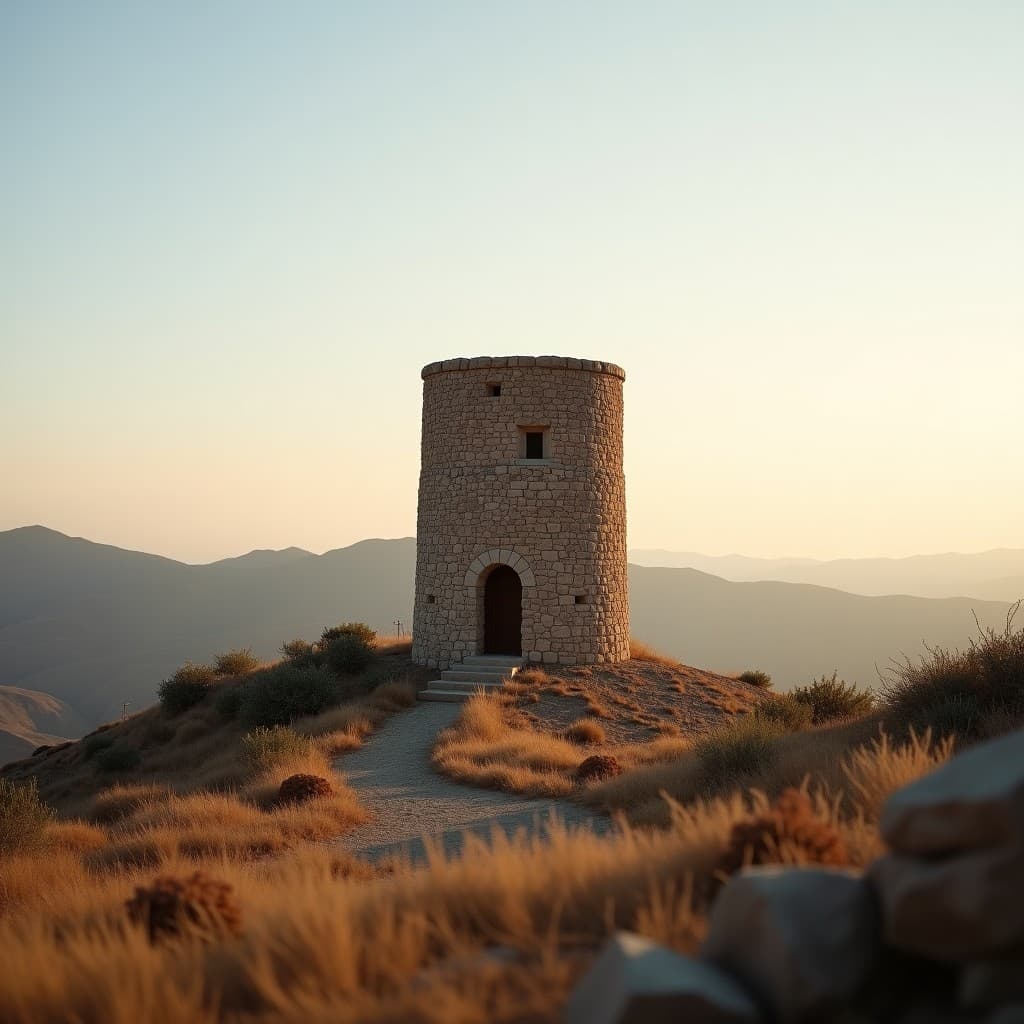
Italy marked the 80th anniversary of the birth of the Republic on Tuesday with military parades, ceremonies and flypasts in Rome, according to Euronews. The celebrations commemorated the June 1946 referendum in which Italian voters chose a democratic republic over the monarchy, a watershed moment that shaped the post-war constitutional order. The ceremonies in the capital reflected the nation's official narrative: the Republic as the culmination of democratic struggle and the foundation of modern Italian identity.
For Sardinia, the Republic's 80-year arc tells a more complicated story. The island joined the Italian state in 1861, but its relationship to Rome has always been marked by distance — geographical, linguistic, cultural and political. The Sardinian language, distinct from Italian and rooted in medieval Latin, remains spoken by a majority of islanders, a marker of identity that persists despite decades of centralised education and media. The island's five special autonomous regions — Sardinia among them — were written into the 1948 Constitution partly to acknowledge this difference.
The military parade in Rome, Euronews reported, was a display of national unity and institutional continuity. For Sardinia's interior, where depopulation and economic fragility have accelerated in recent decades, the Republic's promises of equal citizenship and shared prosperity have felt increasingly hollow. The island's young continue to emigrate to the mainland and abroad; its rural economy struggles; its cultural distinctiveness is celebrated in tourism marketing but marginalised in national policy. The 80-year milestone is thus a moment to ask what the Republic has meant for Sardinia, and what it might mean going forward.
The 1946 referendum was a turning point in European history. Italy, emerging from fascism and war, chose democracy over monarchy in a vote that reflected both exhaustion with the old order and hope for a new one. The Republic that followed was built on a Constitution adopted in 1948, a document that attempted to balance national unity with regional autonomy, individual rights with social solidarity. Euronews's reporting of the 80th anniversary ceremonies emphasised continuity: the military, the institutions, the flag, the shared commitment to democracy.
Sardinia's place in that story is real but often peripheral. The island was included in the Italian state through the unification process of the 1860s, but it was never fully integrated into Italian national consciousness. It remained poor, rural, linguistically distinct. The Sardinian language — su sardu — belongs to the Romance language family but evolved separately from Italian, preserving features of Latin that Italian itself had shed. For centuries, Sardinian was the language of daily life; Italian was imposed through schooling and administration.
The Constitution of 1948 granted Sardinia, along with Sicily, Trentino-Alto Adige, Valle d'Aosta and Friuli-Venezia Giulia, special autonomous status. This was an explicit recognition that Italy was not culturally homogeneous, that some regions had distinct identities and histories that required constitutional protection. The autonomy was meant to allow Sardinia to govern its own affairs — education, culture, economic development — while remaining part of the Italian state. In theory, this was a sophisticated solution to the problem of national unity amid regional difference.
In practice, autonomy has been constrained by fiscal dependence and political marginalisation. Sardinia receives transfers from Rome but has limited power to raise its own revenue. National policies — on agriculture, energy, transport, education — are often set without meaningful consultation with the island. The result is a paradox: Sardinia is formally autonomous but materially subordinate. The Republic's democratic institutions operate on the island, but they are experienced by many Sardinians as imposed from outside rather than rooted in local consent.
The language question exemplifies this tension. Sardinian has official status in the region, and it is taught in schools; yet Italian remains the language of power, of administration, of upward mobility. Young Sardinians grow up bilingual, but many choose to leave the island precisely because opportunities — jobs, education, cultural life — are concentrated on the mainland. The language survives, but it is increasingly a marker of heritage rather than a living medium of daily life for the young.
Euronews's report of the military parades and ceremonies in Rome did not address these regional complexities. That is not a criticism of the reporting; the ceremonies were national events, and the wire focused on the national narrative. But it is worth noting that 80 years of the Republic has not resolved the question of how Sardinia belongs to Italy. The island remains economically peripheral, culturally distinct, and politically underrepresented in national decision-making.
The depopulation of Sardinia's interior is intimately connected to this history. Young people leave because the island offers fewer opportunities than the mainland or abroad. They leave partly because the island's economy — based on agriculture, pastoralism, small-scale tourism — has not been developed in ways that create sustainable livelihoods. They leave partly because the cultural institutions of the island — its language, its traditions, its identity — are not valued in the wider Italian or European economy. The Republic promised equal citizenship; it has delivered unequal economic outcomes.
The autonomy granted to Sardinia in 1948 was meant to protect the island's distinctiveness. In some respects, it has succeeded: Sardinian remains spoken, taught, and used in official contexts. The island has its own regional government, its own laws on certain matters, its own budget (however constrained). But autonomy without economic development, without control over key policy levers, without genuine political voice in national decisions, becomes a kind of gilded cage. The island is free to be Sardinian, but it is not free to be prosperous on its own terms.
The 80th anniversary of the Republic is thus a moment of reflection for Sardinia. The democratic institutions established in 1946 and 1948 have endured; Italy has become a stable, prosperous democracy. But for the island, the promise of the Republic — equal citizenship, shared prosperity, respect for regional identity — remains incompletely realised. The military parades in Rome celebrate national achievement; they do not address the question of why the island's young continue to leave, or what it would take to make Sardinia a place where they might choose to stay.
The international press, including Euronews, tends to cover Italy as a national unit. The Republic's 80-year arc is told as a story of institutional development, democratic consolidation, and European integration. These are real achievements. But they mask internal divisions and unresolved tensions. Sardinia is part of Italy, but it is also distinct from Italy. The Republic has not yet found a way to honour both truths simultaneously. As the island faces new challenges — climate stress, demographic decline, economic fragility — the question of what the Republic means for Sardinia becomes more urgent, not less.