
LAZIO
Rome's Ice-Cream Trap: Tourist Overcharge Exposes Systemic Pricing Problem
A €44 bill for two gelatos sparks debate over capital's tourist exploitation and regulatory failure
Davide Ruspoli1,384 wordsEdition №9Tuesday, 9 June 2026 — Edition № 9
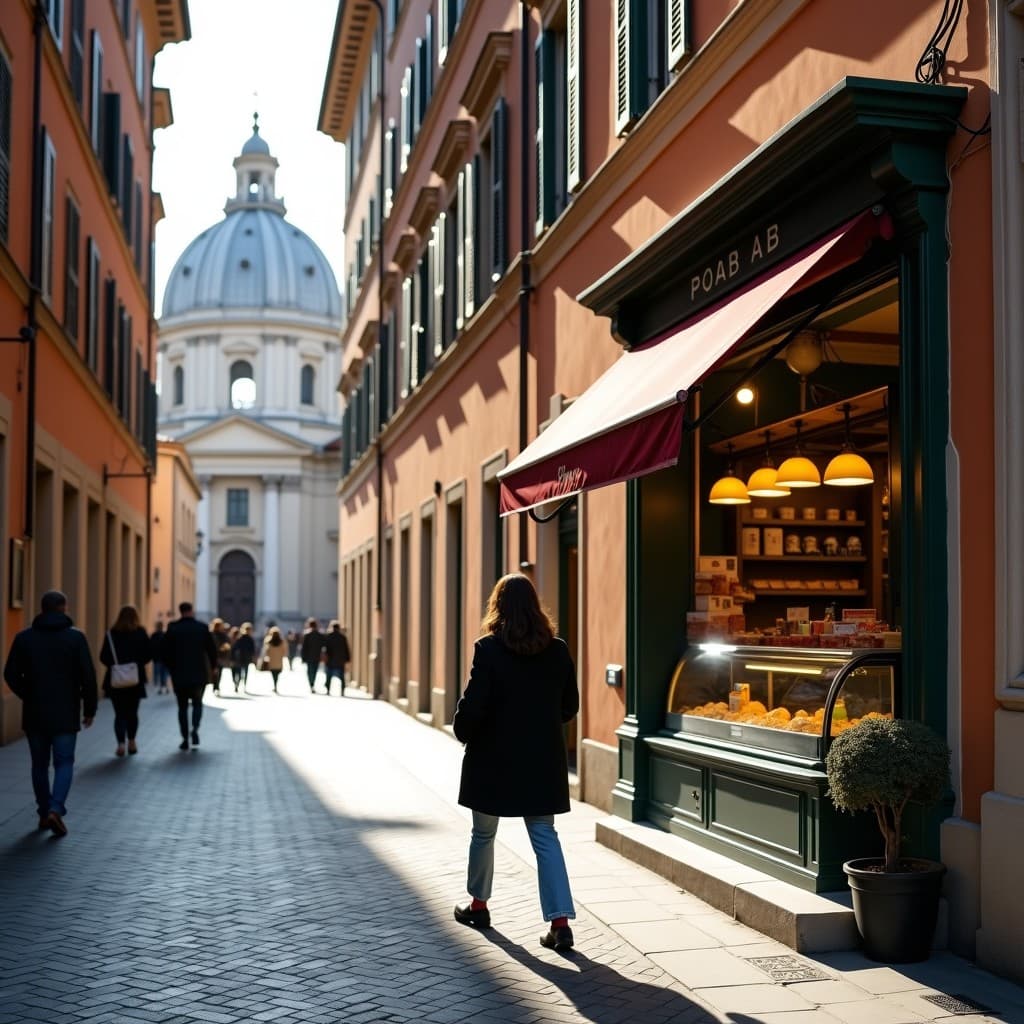
A US tourist from Florida, Nicole Ann, posted a warning on Facebook after being charged €44 for two ice creams at Don Nino, an ice-cream parlour on a street in Rome's historic centre. The post, according to the Guardian, received more than 900 comments, with one Italian writing that they were "ashamed." The incident, trivial in isolation, reflects a systemic problem that Rome's municipal authorities have struggled to address: the exploitation of tourists through opaque pricing and the absence of effective regulatory oversight in the capital's most visited districts.
The price—roughly €22 per gelato in a city where standard portions typically cost between €3 and €5—represents not a premium for location or quality but a deliberate extraction of value from visitors unfamiliar with local norms. The Guardian's reporting suggests that this is not an isolated incident but rather symptomatic of a broader pattern in Rome's tourist economy. The parlour's location near a gallery housed in a baroque church in the historic centre indicates that the vendor has positioned itself to capture tourists moving between major attractions, where price sensitivity is lowest and verification of fair pricing is most difficult.
The social media response—the post's viral circulation and the Italian commenter's expression of shame—reveals a tension within Rome itself. Residents recognize that such pricing damages the city's reputation and erodes the goodwill that tourism depends upon. Yet Rome's municipal government has limited tools to regulate prices in the informal economy, and enforcement of existing consumer protection rules remains sporadic. The incident exposes the gap between Rome's aspirations as a world-class destination and the reality of its regulatory capacity.
Rome's tourism economy has expanded dramatically over the past two decades, transforming the capital into one of Europe's most visited cities. This growth has created opportunities for vendors but also incentives for exploitation. The absence of transparent pricing in many establishments—ice-cream parlours, restaurants, and cafés in tourist zones—creates information asymmetries that favour sellers. A visitor from Florida cannot easily compare prices across vendors or verify that a charge is reasonable without prior knowledge of local norms.
The regulatory framework governing consumer protection in Italy exists at multiple levels: EU consumer directives, Italian national law, and municipal ordinances. Rome's municipal government has attempted to address tourist exploitation through various measures, but enforcement remains inconsistent. The Comune di Roma has issued guidelines recommending price transparency and has occasionally sanctioned egregious violators, but the sheer volume of small vendors in the historic centre makes systematic oversight difficult.
The ice-cream incident also reflects broader questions about Rome's management of its tourism economy. The city has faced recurring criticism from international media about overcrowding, degradation of historic sites, and the transformation of neighbourhoods into theme parks for visitors. The Guardian has reported extensively on these tensions, particularly in districts like the centro storico, where residents have been displaced by rising rents and where the streetscape has been increasingly colonized by souvenir shops and tourist-oriented vendors.
The Don Nino case is notable because it triggered a social media response that crossed the boundary between individual complaint and collective indictment. The 900+ comments on Nicole Ann's post suggest that the incident resonated with both tourists and Romans—tourists recognizing they had been overcharged, Romans recognizing a pattern that damages the city's reputation. This convergence of sentiment creates political pressure on Rome's municipal authorities to demonstrate that they are addressing the problem.
The pricing structure at Don Nino—€22 per gelato—is so far removed from market norms that it suggests either deliberate exploitation or a complete breakdown of competitive pricing mechanisms. In a functioning market, competitors would undercut such prices, and consumers would shift their purchases accordingly. The fact that Don Nino can sustain such pricing indicates either that tourists are not comparing alternatives (because they are moving quickly through the district) or that the parlour has positioned itself in a location where alternatives are not visible or accessible.
The location near a baroque church housing a modern art gallery suggests that the vendor has invested in a high-traffic site and is extracting monopoly rents from the captive audience of tourists moving between attractions. This pattern—vendors positioning themselves at chokepoints in the tourist flow and charging prices that exploit information asymmetries—is widespread in Rome's historic centre. The ice-cream incident is notable only because it was documented and circulated on social media; similar overcharges likely occur daily in restaurants, cafés, and shops throughout the city.
Rome's municipal government faces a dilemma. Strict price regulation could be counterproductive, driving vendors underground or encouraging them to relocate to less visible but equally exploitative locations. Yet the absence of regulation creates the conditions for systematic exploitation that damages Rome's reputation and erodes tourist satisfaction. The balance between permitting market pricing and protecting consumers remains unresolved.
The incident also raises questions about the composition of Rome's tourism economy. If a significant share of visitors' spending goes to vendors engaged in exploitative pricing rather than to quality establishments or cultural institutions, then tourism revenue may not be translating into sustainable economic development. The city's cultural patrimony—its museums, galleries, archaeological sites—attracts visitors, but if those visitors are systematically overcharged for basic goods, their overall experience and their likelihood of returning or recommending Rome to others may be diminished.
The Italian commenter's expression of shame on Nicole Ann's Facebook post suggests that Romans themselves recognize the reputational damage. Rome's identity as a centre of art, history, and culture is incompatible with a reputation for tourist exploitation. The city's soft power—its ability to attract visitors, to influence global taste in fashion and design, to project cultural authority—depends partly on the perception that it is a welcoming and fair destination. Incidents like the ice-cream overcharge undermine that perception.
The Comune di Roma has attempted to address tourism-related problems through various initiatives: restrictions on short-term rental apartments, limits on tour groups in certain areas, and campaigns promoting responsible tourism. The ice-cream incident suggests that consumer protection in the informal economy remains a gap in these efforts. A tourist who has been overcharged for ice cream is unlikely to file a formal complaint with municipal authorities; instead, they post on social media, where the complaint reaches a global audience and shapes perceptions of Rome's trustworthiness.
The incident also reflects asymmetries in information and power between tourists and vendors. A tourist visiting Rome for a few days has limited ability to learn about fair pricing or to identify exploitative vendors. They rely on visible cues—the parlour's location, its appearance, its signage—to make purchasing decisions. A vendor who understands these cues can exploit them. The solution—transparent pricing, consumer education, regulatory enforcement—requires coordination among multiple actors: municipal government, business associations, consumer protection organizations, and tourism boards.
Rome's tourism economy is not unique in facing these challenges. Venice, Florence, and other major European tourist destinations have experienced similar problems. The difference is that Rome, as the capital and seat of government, has greater institutional resources to address the issue. Yet the ice-cream incident suggests that these resources have not been deployed effectively to protect consumers in the informal economy.
The social media response to Nicole Ann's post also indicates that there is demand among Romans for action on this issue. The 900+ comments suggest that many Romans are aware of the problem and frustrated by it. This sentiment could be mobilized by municipal authorities to support enforcement of consumer protection rules and to encourage vendors to adopt transparent pricing practices.
Looking forward, the incident may catalyze action. Rome's municipal government could use it as a case study to identify gaps in consumer protection enforcement and to develop targeted interventions. The Comune could work with business associations to establish pricing guidelines and to encourage transparency. Tourism boards could incorporate information about fair pricing into their guidance for visitors. These measures would not eliminate all exploitation, but they could reduce the most egregious cases and improve Rome's reputation as a fair and welcoming destination.