
NATIONAL
Rome's migration divide echoes across Italy's northeastern frontier
Tens of thousands march in rival demonstrations as far-right citizens' initiative advances; Friuli-Venezia Giulia braces for policy shift on asylum and transit routes.
Sergio Madrussan542 wordsEdition №15Sunday, 14 June 2026 — Edition № 15
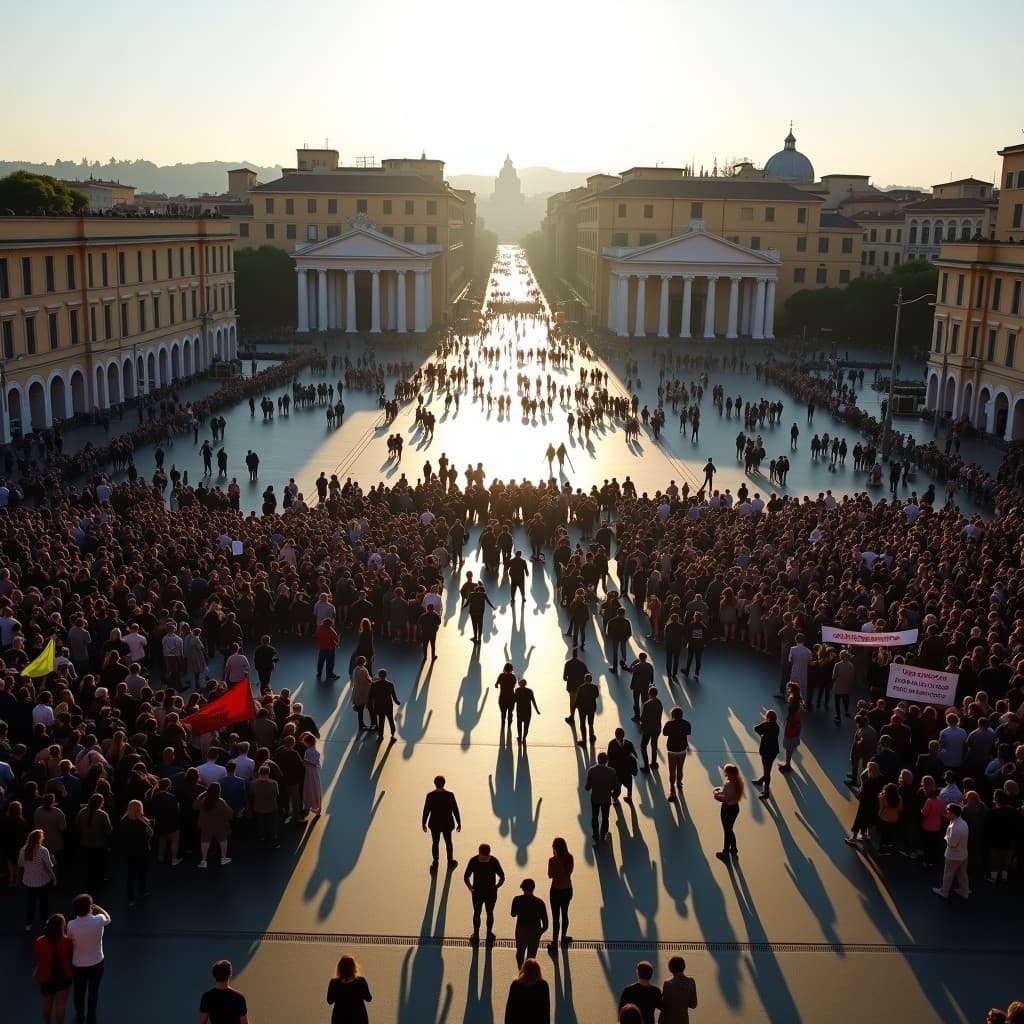
On Saturday, June 13, tens of thousands of Italians took to the streets of Rome in rival demonstrations over migration, according to reporting from the Associated Press and Al Jazeera. A far-right citizens' initiative seeking sweeping measures against migrants had garnered enough parliamentary support to move forward, prompting the duelling rallies and a heavy police deployment to keep the crowds apart. The proposal, promoted by right-wing groups, includes measures described by opposition parties and legal organisations as constitutionally and ethically problematic—among them a migrant "repatriation bonus" scheme.
For Friuli-Venezia Giulia, which sits on Italy's most porous border and hosts the country's largest northeastern transit corridor, the political momentum in Rome carries immediate consequence. The region's ports, especially Trieste, and its overland routes through Slovenia have long been the frontier where Italy's asylum and migration policy meets Central European reality. Any hardening of the national stance—whether through legislative change or enforcement priorities—will reshape the pressure on local authorities, border services, and the humanitarian infrastructure that has grown around irregular arrivals. The region's Slovene and Central European hinterland has already seen migration flows intensify as routes shift; a more restrictive Italian posture could redirect those flows eastward or strain bilateral agreements with neighbours.
The rallies themselves reflected a broader European pattern: migration has become a dominant electoral and legislative flashpoint, with Italy's far-right parties leveraging public anxiety into policy proposals. The Guardian and other outlets noted the irony that underpinned one of the pro-migration counter-demonstrations: a Nigerian man who won €500,000 in an Italian lottery scratchcard but could not claim his prize because he was undocumented—only recently gaining a residency permit after more than a decade of legal limbo. That case, reported by the Guardian on June 12, underscored the contradictions embedded in Italy's current asylum framework: a man could win state money but not access it, highlighting the gap between formal rights and practical inclusion.
In Trieste and across the Friuli-Venezia Giulia region, the political shift carries weight beyond symbolism. The port authority and local law enforcement already manage one of Europe's most complex migration pressure points, where seasonal flows from the Balkans, irregular sea arrivals diverted from southern ports, and transit migrants heading north intersect. Any new "repatriation" scheme or tightened border enforcement will require coordination with Slovenian and Croatian authorities—a delicate negotiation that the region's multilingual, border-conscious political class understands intimately. The far-right initiative, if enacted, could also affect EU funding streams and bilateral cooperation frameworks that currently underpin the region's humanitarian response.
The immediate question is what Parliament will do with the initiative. Al Jazeera reported that thousands of police were deployed to manage the rival marches, signalling the government's concern over public order. The regional government in Trieste and the provincial authorities in Udine and Gorizia will be watching closely to see whether new legislation emerges and, if so, how it will be implemented on the ground—and whether they will have the resources and political cover to enforce it without destabilising the fragile border management protocols that have evolved over years of migration pressure.