
NATIONAL
Rome's rival marches reveal deepening split over migration policy
Tens of thousands protest as far-right citizens' initiative reaches Parliament; EU rules take effect amid Italian discord
Adriana Sole487 wordsEdition №16Monday, 15 June 2026 — Edition № 16
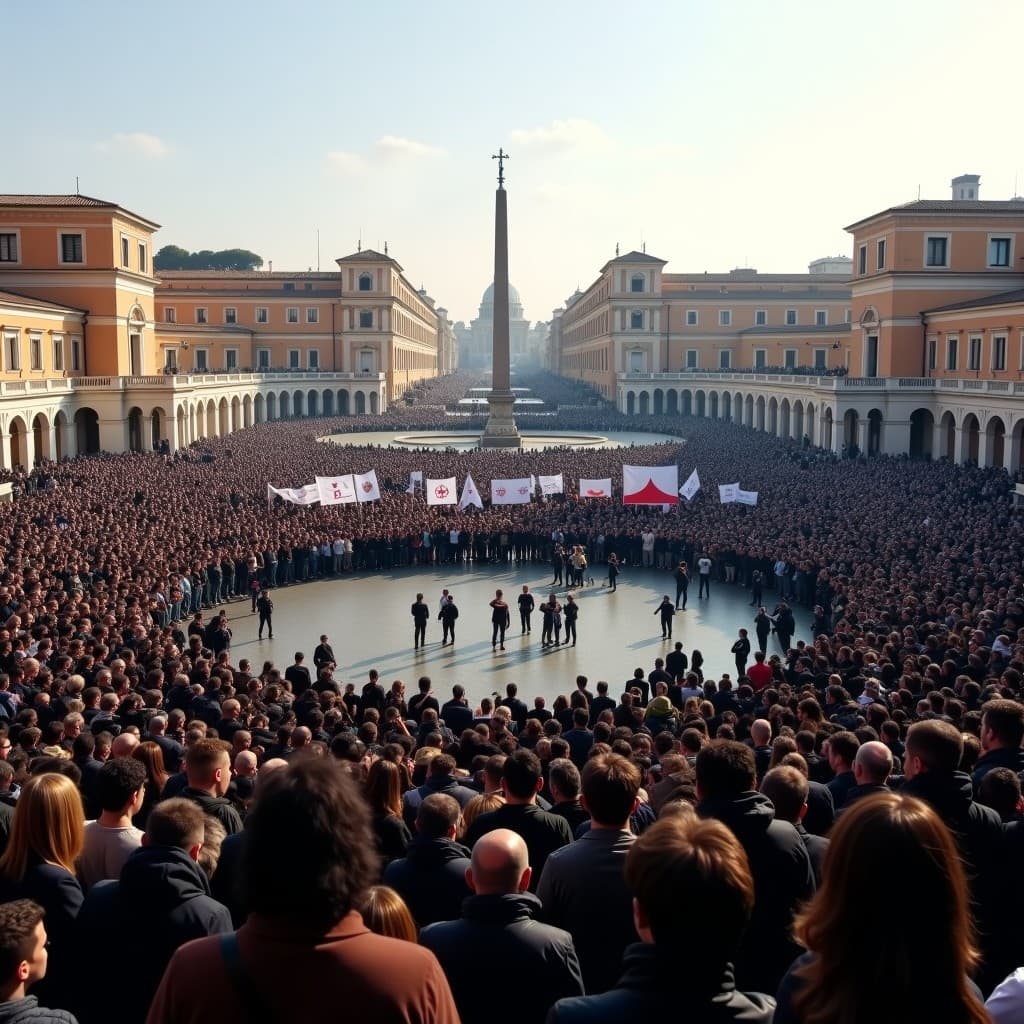
Competing rallies in Rome on Saturday drew tens of thousands of Italians to the streets to contest the country's approach to migration. According to the Associated Press, the demonstrations came after a far-right citizens' initiative gathered sufficient support to be brought before Parliament, calling for what the proposal frames as "remigration" of migrants back to their countries of origin. The timing coincided with the European Union's overhaul of migration rules, which took effect this month and introduces stricter screening, biometric registration and accelerated examination procedures at the point of arrival.
The Italian rallies reflect a broader European tension. Reuters reported this week that the EU's new asylum framework, while representing the bloc's most comprehensive migration overhaul in years, faces doubts about its practical impact and whether member states will implement it uniformly. For Italy, which sits at the Mediterranean frontier and has absorbed disproportionate arrivals, the dual pressure—from domestic far-right movements and from Brussels—illustrates the fault lines between restrictive sentiment at home and the EU's attempt at coordinated, if contested, policy. The far-right proposal now headed to Parliament signals that migration remains a mobilizing force in Italian domestic politics.
The European Commission's tightened rules are intended to distribute asylum responsibility more evenly across member states, yet implementation remains uncertain. Italy's role as a primary entry point means the new framework will test whether the country's government can balance EU obligations with the political demands evident in Saturday's demonstrations. The outcome will shape how European migration policy functions in practice across the Mediterranean.
Reuters reported that the EU's new migration regime introduces screening and biometric registration at the earliest stage of arrival, before asylum claims receive full substantive examination. This represents a significant shift toward prevention and deterrence at the border rather than processing claims within the asylum system. For Italian ports and coastal authorities, the framework implies accelerated examination timelines and faster return planning—changes that will place new operational demands on Mediterranean rescue and processing infrastructure.
The far-right initiative now advancing in Rome reflects domestic political currents that the world's press has tracked closely. The Times of Israel reported that the proposal includes a migrant "repatriation bonus" scheme that opposition parties and legal groups have criticized as unconstitutional and ethically problematic. The scale of Saturday's counter-demonstrations—with tens of thousands marching in support of migrant rights—indicates that Italy remains divided on the question, even as both the EU and domestic political movements push toward stricter measures.
The convergence of these two developments—the EU's new rules taking effect and the far-right initiative reaching Parliament—creates an unusual moment for Italian policy. The country will be implementing Brussels-mandated procedures while simultaneously debating a domestic proposal that goes further than EU requirements. How Italy's government navigates this tension will be watched across Europe as a test of whether member states can absorb migration policy without fracturing along ideological lines.