
TOSCANA
Rothko's Colour Fields Find Spiritual Home in Florence's Renaissance Spaces
An exhibition pairing Mark Rothko's abstract expressionism with Renaissance religious art in Florence shows how the American painter's work echoes the contemplative power of the Old Masters.
Costanza Bardi456 wordsEdition №23Monday, 22 June 2026 — Edition № 23
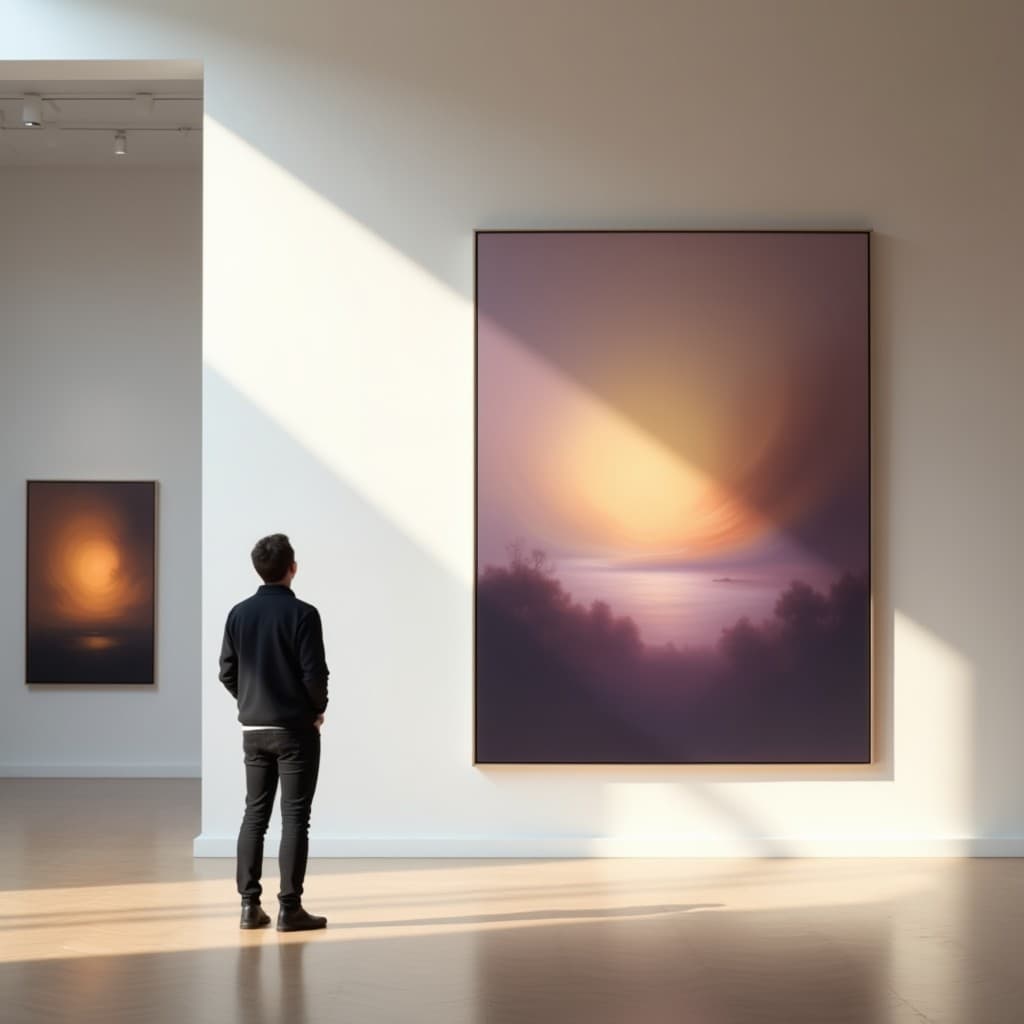
A major exhibition in Florence has paired the work of Mark Rothko, the American abstract expressionist, with Renaissance religious art, revealing an unexpected spiritual kinship between the two traditions. According to The Guardian's art critic Rhiannon Lucy Cosslett, the exhibition—which takes place at Palazzo Strozzi and two satellite sites and is curated by Rothko's son Christopher and independent curator Elena Geuna—demonstrates how Rothko's colour field paintings provoke a contemplative, almost devotional response similar to that intended by Renaissance frescoes and altarpieces.
Rothko visited Florence for the first time at age 47 and was profoundly moved by what he saw in the city's churches and galleries, particularly the frescoes of Fra Angelico in the cells of San Marco monastery. The exhibition makes explicit what Rothko's later work suggests: that abstract colour, deployed at monumental scale, can function as a form of meditation and spiritual experience. Cosslett describes standing before a large Rothko canvas and feeling tearful—an emotion born not of narrative content but of the painting's capacity to dissolve the viewer's sense of self and provoke what she calls 'awe and wonder.'
For Florence, a city whose global image rests almost entirely on its Renaissance heritage, the presence of contemporary abstract art in dialogue with that heritage represents a deliberate curatorial gesture. It asserts that the city remains a place where art—whether five centuries old or modern—can function as a form of spiritual and intellectual refuge. In an era of mass tourism and digital distraction, the exhibition positions Florence not merely as a museum of the past but as a space where contemplation and aesthetic experience remain possible.
The exhibition arrives at a moment when Florence's relationship with its own artistic legacy has become strained by overtourism. The city receives roughly four million visitors annually, many of them moving through the Uffizi, the Accademia and the Duomo in prescribed patterns, spending minutes before works that were designed to reward sustained attention. By bringing Rothko—an artist whose work explicitly resists narrative and demands prolonged looking—into dialogue with Fra Angelico and other Renaissance masters, the exhibition reframes contemplation itself as the point.
Cosslett's account of her experience at San Marco, where she encountered Rothko's paintings in proximity to Fra Angelico's frescoes, underscores this parallel. Both artists sought to create conditions for spiritual experience through colour, composition and scale. For Rothko, who was overwhelmed by the intensity of what he saw in Florence's religious spaces, the challenge became how to achieve a similar effect through abstraction—through pure colour relationships and monumental form rather than through iconography or narrative.
The exhibition's presence in Florence also reflects a broader shift in how the city's cultural institutions are thinking about their role. Rather than ceding contemporary art to Milan or Rome, Florence is asserting itself as a place where historical and modern sensibilities can meet. For visitors exhausted by the logistics of mass tourism—the queues, the crowds, the pressure to see everything quickly—the Rothko exhibition offers something that the postcard Florence cannot: the possibility of standing alone in front of a painting and feeling something that has nothing to do with its fame or its Instagram potential.