
SARDEGNA
NATO's Sardinian bases face new pressure as U.S. military eyes small nuclear reactors
American defence planners seek energy independence for forward bases; island's strategic role in Mediterranean deepens amid geopolitical strain
Gavino Sanna1,247 wordsEdition №7Sunday, 7 June 2026 — Edition № 7
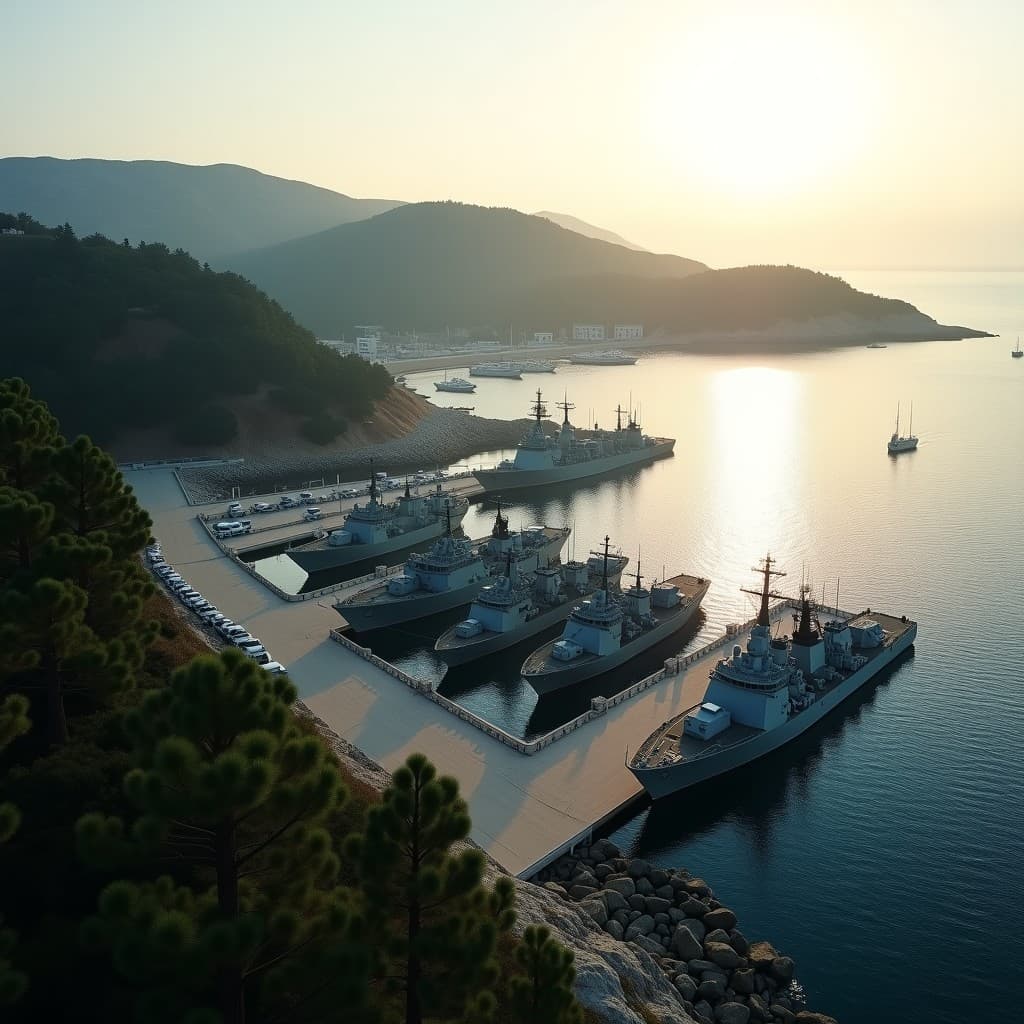
The U.S. military is pursuing small modular nuclear reactors to ensure that forward bases can survive two weeks without external power supplies, according to Military.com. James Walker, a nuclear physicist and CEO of NANO Nuclear Energy, told the outlet that diesel reserves alone may not be sufficient to keep bases operational during fuel disruptions, attacks or grid failures. The shift reflects American defence planners' concern that traditional power infrastructure—vulnerable to sabotage, cyberattack or supply chain collapse—leaves NATO installations exposed.
Sardinia hosts two major NATO bases: the naval station at La Maddalena and the air base at Decimomannu, both critical to U.S. and allied operations in the Mediterranean. The island's strategic position—between Europe and North Africa, astride sea lanes to the Suez Canal—makes these installations essential to NATO's southern flank. Any change in how they are powered will ripple through the island's energy policy and its relationship with Rome.
The proposal raises immediate questions about Sardinia's autonomy and environmental exposure. As a region with special status within the Italian state, Sardinia retains significant control over land use and environmental protection. A nuclear installation on the island would require approval from the regional government in Cagliari, not merely from Rome or NATO command. The Sardinian interior, already stressed by drought and wildfire, would face new infrastructure and security demands.
Small modular reactors (SMRs) represent a shift in military energy strategy. Unlike large nuclear plants, which require extensive cooling water and centralised grids, SMRs are designed to operate independently and be deployed at remote or forward locations. Military.com's reporting suggests that U.S. defence officials see them as a solution to a fundamental vulnerability: bases that lose external power lose communications, refrigeration, medical capacity and weapons systems within hours.
The timing of this push is significant. NATO has spent the past two years reinforcing its eastern flank against Russian threats and its southern flank against instability in the Sahel and Middle East. Sardinia, which hosts not only American personnel but also Italian, British and other allied forces, sits at the intersection of these concerns. A base that can operate autonomously for two weeks becomes harder to coerce or disable.
Yet the environmental and political stakes are substantial. Sardinia's interior has experienced severe drought in recent years, with water scarcity affecting agriculture and pastoralism. A nuclear reactor requires cooling capacity—either water-intensive or air-cooled systems that generate heat. The island's Mediterranean climate, increasingly arid, makes water availability a constraint. Military.com did not address how SMRs would be cooled in Sardinia's conditions.
The regional government in Cagliari has long balanced competing pressures: the economic benefit of NATO presence and military contracts, against the environmental and social costs of hosting foreign military infrastructure. The Sardinian language, island identity and a strong ecological movement mean that any new military installation faces scrutiny. A nuclear facility would be the most sensitive such proposal in decades.
Italy's own nuclear history complicates the picture. Italy abandoned nuclear power in 1987 after a referendum, and public opinion remains sceptical of nuclear energy. Although the Italian government has recently signalled openness to small reactors as part of its energy transition, the prospect of a U.S. military nuclear installation on Italian soil—even on a NATO base—could trigger political backlash on the mainland and on the island.
The proposal also intersects with broader questions about NATO basing in the Mediterranean. The alliance has been expanding its presence in the region, particularly in response to Russian naval activity and Middle Eastern instability. But each new installation or upgrade creates friction with local populations and with Italian sovereignty concerns. Sardinia, as a region with special autonomy, has leverage to negotiate terms that mainland regions do not.
Military.com's reporting did not specify whether the U.S. has already approached Italy or the Sardinian regional government about deploying SMRs at La Maddalena or Decimomannu. It is likely that any such proposal would first be discussed at the level of NATO command and the Italian Ministry of Defence. But implementation would require environmental assessment, regional approval and public consultation—processes that could take years.
The energy security argument is compelling from a military standpoint. A base that cannot be starved of power is a base that cannot be coerced. But the same logic applies to adversaries: a base with its own nuclear reactor becomes a higher-value target. Military.com did not address the security implications of placing a small reactor on an island already exposed to Mediterranean geopolitics.
Sardinia's role in European energy transition adds another layer. The island has invested in wind and solar capacity, and the regional government has promoted renewable energy as part of its identity and economic strategy. A military nuclear reactor would sit uneasily alongside that narrative, even if it produces zero-carbon power. The optics matter in a region where environmental consciousness is high.
The precedent is also worth noting. If the U.S. military deploys SMRs at NATO bases in Sardinia, similar installations could follow at other forward positions—Cyprus, Greece, the Balkans. This would represent a significant militarisation of Mediterranean energy infrastructure, with implications for regional stability and civilian nuclear policy across southern Europe.
What remains unclear is the timeline. Military.com quoted a nuclear energy executive, not a U.S. military official, so the proposal may still be in the exploratory phase. But the fact that it is being discussed publicly suggests that the U.S. military sees it as a serious option. Sardinia's government and environmental groups will likely begin preparing their responses.
The island's history as a strategic asset—first for Rome, then for Spain and Britain, now for NATO—means that its energy infrastructure is never purely civilian. But the scale and sensitivity of nuclear power distinguish it from earlier military installations. Sardinia faces a choice between deepening its role as a NATO stronghold and preserving the environmental and political autonomy it has fought to maintain since gaining special status in the Italian constitution.