
TOSCANA
Tuscany's Rental Boom Falters as Earnings Drop 16%
Once central to tourism recovery, short-term lets now face tougher conditions across Italy's most visited region
Costanza Bardi1,247 wordsEdition №9Tuesday, 9 June 2026 — Edition № 9
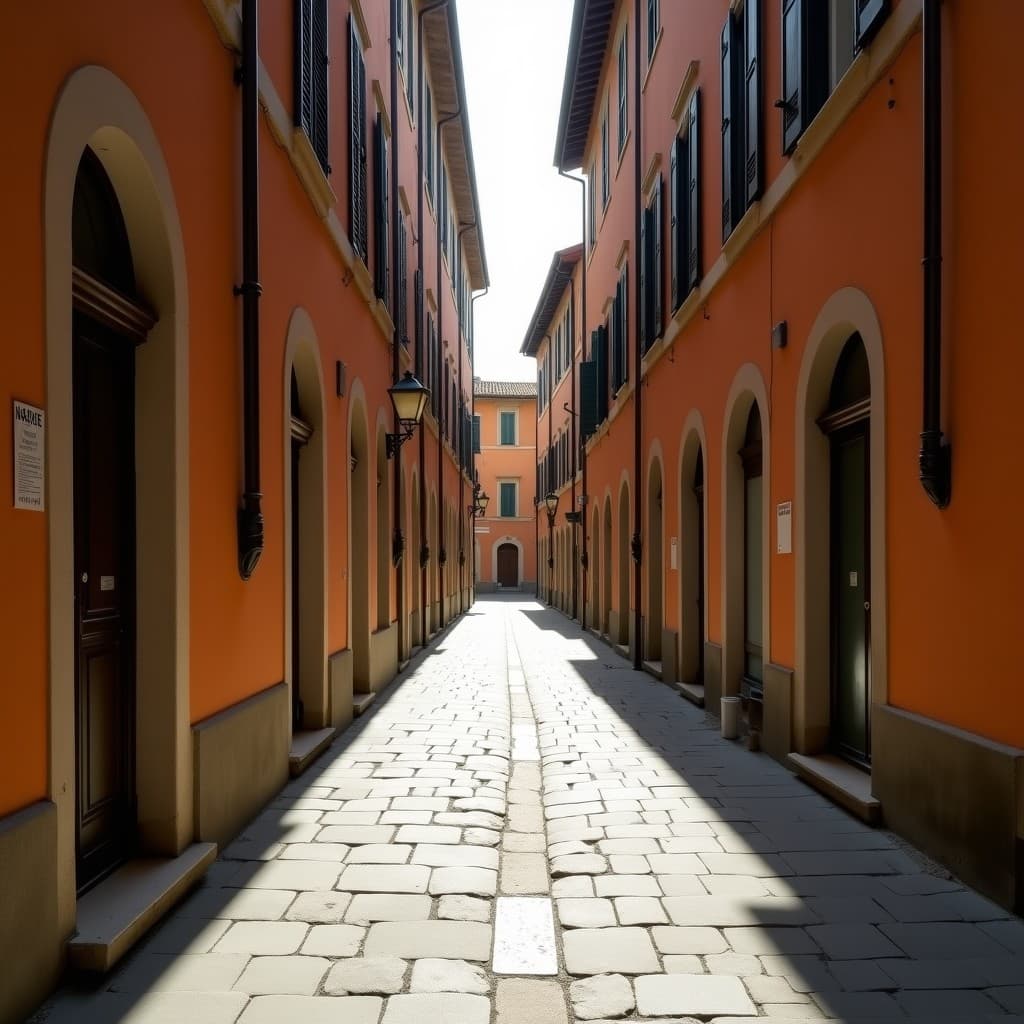
Italy's short-term rental market is experiencing a sharp downturn after two years of robust recovery following the pandemic, according to tourism-review.com. Earnings in the sector have fallen nearly 16% on average, marking a reversal of the gains that made holiday lets central to Italy's tourism rebound. The decline signals tougher conditions ahead for a market that had been seen as a reliable engine of regional growth.
For Tuscany, where short-term rentals have proliferated across Florence's historic centre and the countryside villas of the Val d'Orcia, the contraction carries particular weight. The region's tourism economy depends heavily on independent travellers renting apartments and farmhouses, a segment that now faces weakening demand and margin pressure. Tourism-review.com's reporting suggests the downturn reflects broader shifts in how international visitors are choosing to travel and spend.
The timing coincides with Florence's own crackdown on tourist lets in nine central neighbourhoods, a policy that has forced some operators to relocate or exit the market entirely. Whether the municipal restrictions have accelerated the national decline or simply coincided with it remains unclear from the available reporting; what is certain is that operators across Tuscany are now navigating both regulatory pressure and reduced profitability simultaneously.
The contraction in Italy's short-term rental sector represents a significant shift in the post-pandemic tourism landscape. Tourism-review.com reported that the market, which had rebounded strongly in the two years following COVID-19 lockdowns, is now facing headwinds that suggest the recovery phase has ended. The 16% average earnings decline is substantial enough to force recalibration across the industry, from individual property owners to larger management platforms.
Tuscany's exposure to this downturn is acute. The region has become synonymous with the short-term rental economy, particularly in Florence, where holiday lets have transformed entire neighbourhoods into transient spaces. The countryside estates—the restored farmhouses and villas that feature prominently in international lifestyle media—have also relied heavily on seasonal bookings from foreign visitors. When demand softens, these properties face extended vacancy periods and pressure to lower nightly rates.
The foreign press has framed Italy's rental market as a bellwether for European tourism more broadly. As travel patterns normalise after the pandemic surge, international visitors are making different choices: some are returning to traditional hotels, others are extending stays in single locations rather than moving between multiple short-term lets, and some are simply travelling less frequently or to different destinations. Tourism-review.com's analysis suggests these shifts are structural rather than cyclical.
Florence's municipal ban on new tourist lets in nine neighbourhoods—a policy that took effect after years of resident complaints about noise, overcrowding, and the hollowing out of residential communities—has added a regulatory dimension to the market's decline. The ban does not affect existing licences, but it signals that city authorities view the rental explosion as a problem requiring intervention. Whether the restriction accelerates the broader contraction or merely formalises a market correction already underway is a question the foreign press has not yet definitively answered.
The economics of short-term rental operation in Tuscany have shifted markedly. Operators must now contend with higher cleaning costs, platform commissions that have risen as competition intensifies, and the administrative burden of compliance with municipal regulations. Tourism-review.com's reporting suggests that properties in less desirable locations or with higher operating costs are most vulnerable to the downturn. In Florence, where rents and property maintenance are expensive, the margin between nightly rates and operating costs has compressed.
For rural Tuscany, the picture is somewhat different. The farmhouse-to-villa rental market depends on a different clientele—longer stays, higher nightly rates, and often repeat bookings from affluent international visitors. Yet even this segment is not immune to the broader contraction. Tourism-review.com's data suggests that average earnings are falling across all property types and locations, indicating that the downturn is not confined to budget or urban segments.
The regional consequence extends beyond individual property owners. Short-term rental platforms, many of which are based outside Italy or operate with minimal local presence, have built business models around high transaction volumes and rapid turnover. When earnings fall 16%, the incentive to invest in customer service, dispute resolution, or regulatory compliance diminishes. This can create a feedback loop in which service quality declines, guest satisfaction falls, and bookings contract further.
Local tourism boards and regional authorities are watching the contraction with concern. Short-term rentals generate tax revenue, albeit often imperfectly collected, and they support ancillary services—cleaning companies, linen suppliers, maintenance contractors. A sustained downturn in the sector ripples through these supply chains. Tourism-review.com's reporting does not yet quantify the broader economic impact, but regional economists are likely to be tracking it closely.
The foreign press has also noted that the contraction in Italy's rental market comes as other European destinations are experiencing similar pressures. Barcelona, Amsterdam, and Vienna have all implemented restrictions on short-term lets in recent years, driven by resident complaints and housing affordability concerns. Italy's market downturn may reflect not just regulatory intervention but also a shift in international travel patterns away from the most saturated European cities.
What remains unclear from the available reporting is whether the 16% earnings decline will stabilise at a new equilibrium or continue to deteriorate. Tourism-review.com has identified the downturn as a shift from recovery to contraction, but has not projected how far the market may fall or what conditions might arrest the decline. For Tuscany's operators, this uncertainty is itself a problem: investment decisions, staffing levels, and property maintenance schedules all depend on forecasts that are now unreliable.
The intersection of regulatory restriction and market contraction creates a particular challenge for Florence. The city's ban on new tourist lets was designed to reduce the number of holiday apartments and restore residential character to central neighbourhoods. Yet if the market is already contracting due to weaker demand, the ban may have limited effect on the total number of properties in use, while operators who remain may face even tighter margins and reduced incentive to maintain properties well.
For Tuscany's regional government and tourism authorities, the moment calls for clarity about what comes next. Tourism-review.com's reporting suggests that the short-term rental market will not return to the growth trajectory of 2023–2025. Whether that contraction stabilises the market at a lower but sustainable level, or whether further deterioration is likely, will shape policy responses across the region. The foreign press will continue to watch how Italy manages the transition from a tourism economy built on rapid growth to one based on more modest, regulated expansion.