
SPORT
Sinner's French Open collapse raises health concerns for Italian tennis
World No. 1 exits in second round as three compatriots advance to quarterfinals for first time
Tobia Marenghi1,247 wordsEdition №4Thursday, 4 June 2026 — Edition № 4
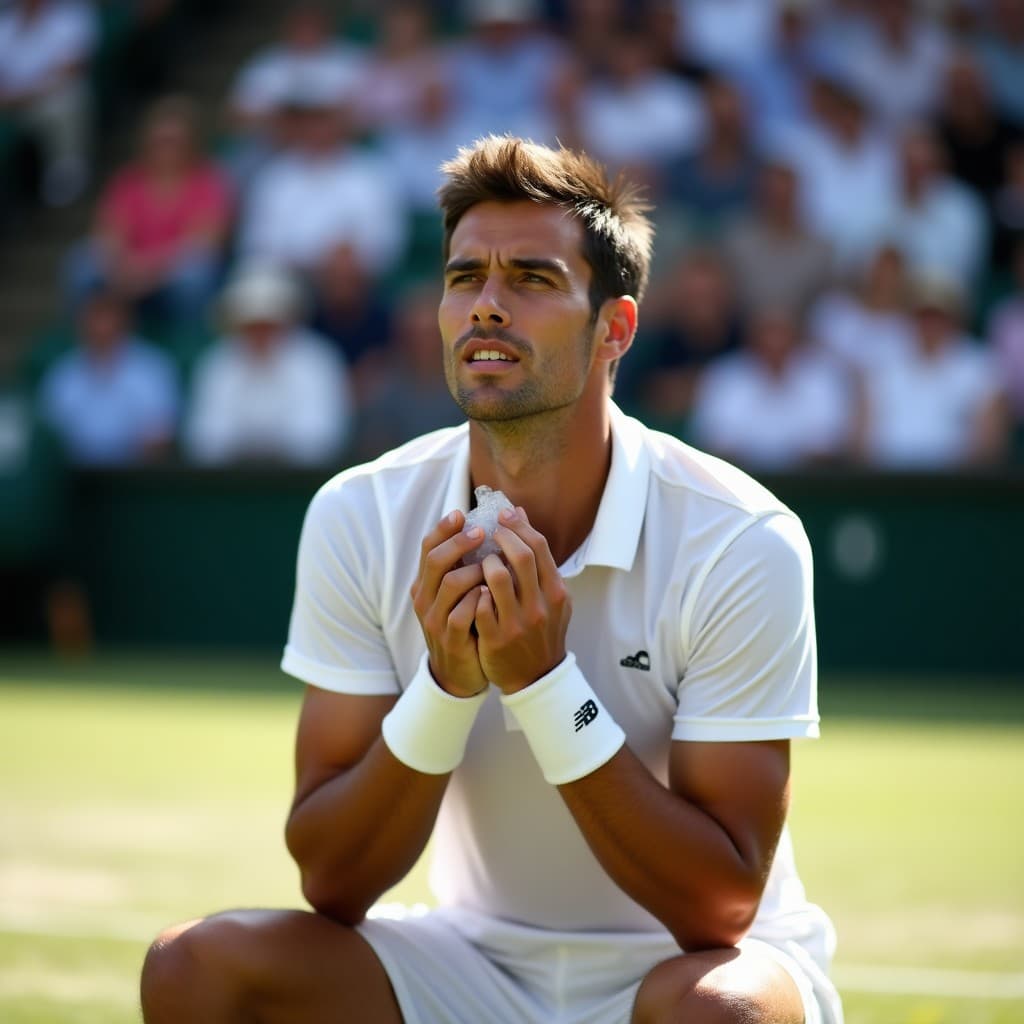
Jannik Sinner, the world's top-ranked tennis player and a four-time Grand Slam champion, fell to Juan Manuel Cerundolo of Argentina in the second round of the French Open on Thursday, according to Deadspin and AP News. The loss came during a heat wave that swept through Paris, with photographs from the tournament showing Sinner cooling himself with ice during the match. His early exit marks a dramatic reversal for Italian tennis, which has built its recent success on his dominance.
The timing of Sinner's collapse is particularly striking because three other Italian men have reached the French Open quarterfinals for the first time, according to Greenwich Time. Matteo Berrettini will face Matteo Arnaldi in the night session on Wednesday, ensuring at least one Italian advances to the semifinals, while Flavio Cobolli meets Canada's Felix Auger-Aliassime in another quarterfinal. The depth of Italian men's tennis has never been stronger—yet its flagship player has vanished from the tournament.
Sinner intends to travel to Turin in the coming days for in-depth medical examinations, according to Telecom Asia Sport. The Italian wants to determine the cause of his recent health problems and assess his current condition. The nature of these health issues remains unclear, but the decision to seek urgent medical evaluation suggests concerns beyond ordinary fatigue.
The contrast between Sinner's withdrawal and the emergence of Berrettini, Arnaldi, and Cobolli in the same tournament underscores a paradox in Italian tennis. For the past two years, Sinner has been the undisputed face of the sport in Italy—a generational talent whose Grand Slam wins and world No. 1 ranking have lifted the entire nation's profile on the tennis calendar. His absence from the latter stages of Roland Garros, the sport's second-most prestigious major, represents a significant vulnerability for Italian tennis at a moment when the country's depth should be celebrated.
The French Open heat wave, documented by AP News, created conditions that tested players across the tournament. Photographs showed competitors struggling with the temperature, and Sinner's visible reliance on ice during his match against Cerundolo suggested he was among those most affected. Whether the heat was the primary cause of his loss or merely a complicating factor remains unknown; the decision to seek medical evaluation in Turin suggests the problem runs deeper than acute heat stress.
Sinner's four Grand Slam titles—won across the Australian Open, US Open, and Wimbledon—had established him as one of the sport's most reliable performers on the major stage. His world No. 1 ranking represented the culmination of a rapid rise through the professional ranks. The French Open, however, has proven less hospitable. His second-round exit this year follows a pattern of earlier-than-expected losses at Roland Garros in previous seasons, raising questions about whether the clay courts of Paris present a particular challenge for his game or whether other factors are at play.
The emergence of Berrettini, Arnaldi, and Cobolli in the quarterfinals suggests that Italian tennis has built a more resilient foundation than it appeared to have. Berrettini, a former Wimbledon finalist, has staged a comeback after years of injury struggles. Arnaldi and Cobolli represent the next generation of Italian talent. Their collective presence in the last eight of a Grand Slam is a milestone that Italian tennis has not reached in men's singles in recent memory, according to Greenwich Time. Yet the narrative of this French Open will inevitably centre on Sinner's unexpected collapse rather than on the success of his peers.
The timing of Sinner's medical evaluation is also significant for the broader Italian tennis calendar. The grass-court season, which culminates at Wimbledon, begins within weeks. If Sinner's health issues are serious enough to require urgent medical investigation, his availability for the season's most prestigious tournament—where he has never reached a final—is now in question. Wimbledon represents one of the few remaining Grand Slams where Sinner has not yet won a title, and the loss of his participation would be a major blow to Italian tennis at a critical moment.
From a commercial perspective, Sinner's dominance has driven significant interest in Italian tennis globally. His sponsorships, appearance fees, and media rights deals have elevated the sport's profile in Italy and abroad. An extended absence due to health concerns could affect broadcasting arrangements, sponsorship commitments, and the financial ecosystem that has grown around his success. The Italian tennis federation and the broader sports business community will be watching his Turin medical evaluation closely.
The French Open's heat conditions, while challenging for all competitors, may have disproportionately affected Sinner if underlying health issues were already present. AP News's coverage of the heat wave at Roland Garros documented the physical toll on players across multiple matches. Sinner's visible struggle with temperature management during his loss to Cerundolo suggests he was not simply outplayed but was operating under physical constraints.
Berrettini's presence in the quarterfinals carries its own narrative weight. The 32-year-old Italian has spent much of the past five years recovering from injuries that threatened to end his career. His return to the latter stages of a Grand Slam is a personal redemption story that Italian sports media has followed closely. Yet his advancement, and that of Arnaldi and Cobolli, is likely to be overshadowed by the mystery surrounding Sinner's health.
The question of what caused Sinner's second-round exit will dominate Italian sports coverage in the coming days. Whether the cause is a specific injury, a systemic health issue, or simply an off day remains unknown. The decision to seek medical evaluation in Turin rather than continuing to compete or resting at home suggests the Italian player and his team believe something requires professional assessment beyond routine recovery protocols.
For Italian tennis as a whole, Sinner's exit is a reminder of the fragility of sporting dominance. Even the world's best player is vulnerable to unexpected setbacks. The strength of Italian men's tennis will now be tested by the performance of Berrettini, Arnaldi, and Cobolli in the coming rounds. If they can convert their quarterfinal positions into semifinal and final appearances, Italian tennis will have demonstrated that its recent success is built on more than a single extraordinary talent.
The French Open's conclusion will be watched closely by Italian sports observers not only for the results of Berrettini, Arnaldi, and Cobolli but also for any updates on Sinner's condition. His medical evaluation in Turin will likely yield information about his availability for the grass-court season and beyond. The health of the world's top player is not merely a personal matter; it is a question of national sporting significance for Italy.