
FRIULI-VENEZIA GIULIA
Slovenia's New Government Signals Shift in Balkans' Western Alignment
Prime Minister Janez Jansa's return to power reshapes the political landscape on Italy's eastern frontier.
Sergio Madrussan1,289 wordsEdition №6Saturday, 6 June 2026 — Edition № 6
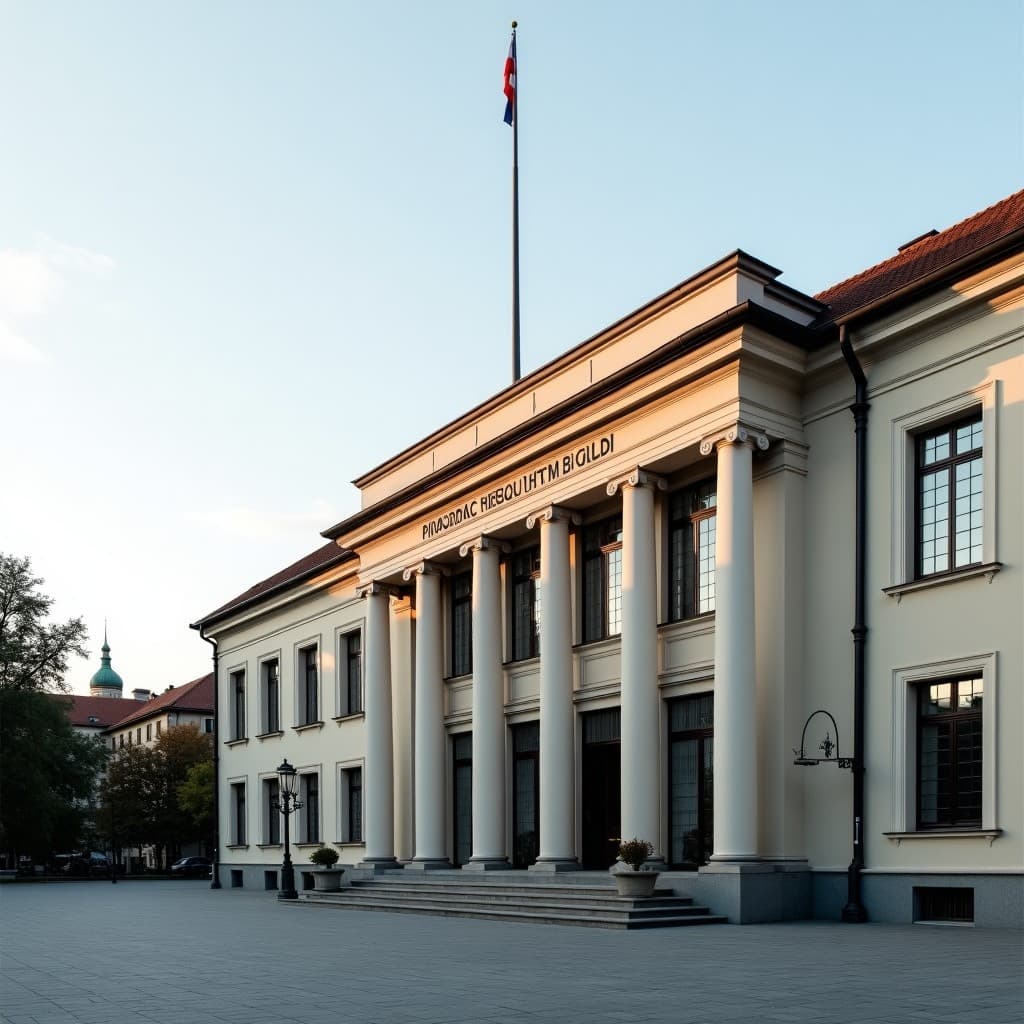
Janez Jansa was sworn in as Slovenia's Prime Minister for the fourth time on Friday, and within an hour had the Palestinian flag lowered from Ljubljana's main government building, where it had flown for two years, according to Bloomberg. The move signals a decisive shift in Slovenia's geopolitical orientation and carries immediate implications for the northeastern Italian region of Friuli-Venezia Giulia, which shares a long border with Slovenia and has deep economic and cultural ties to the Slovene state.
The flag removal is not a symbolic gesture alone. It reflects a reordering of Slovenia's alignment with the West and a reassertion of pro-Israel positions that Jansa's previous governments championed. For Italy, and particularly for the border region, this matters because Slovenia's foreign policy choices ripple across trade relationships, diplomatic coordination on EU matters, and the broader question of how the Balkans and Central Europe position themselves in relation to Western institutions and Middle Eastern conflicts.
Jansa's return to power comes at a moment when the EU is intensifying its focus on Balkans enlargement and when the northeastern Italian border region is experiencing heightened pressures from migration, transit traffic, and the need to manage complex relationships with both Western and Central European neighbours. The Slovene government's pivot toward Israel and away from the Palestinian cause represents a realignment that affects how Slovenia relates to the broader EU consensus on Middle East policy and, by extension, how it cooperates with Italy on shared border and security matters.
Jansa's political career has been marked by strong positions on national sovereignty, NATO alignment, and support for Israel. Bloomberg reported that the flag removal occurred within an hour of his swearing-in, suggesting that it was a deliberate opening move designed to signal continuity with his previous administrations and a break with the government that preceded him. The symbolic weight of a flag removal cannot be understated in European politics, where such gestures carry meaning far beyond their literal content.
For Friuli-Venezia Giulia, Jansa's return is significant because Slovenia is not simply a neighbouring country but an integral part of the region's economic and cultural ecosystem. The border between Italy and Slovenia, established after the First World War and redrawn after the Second, is one of Europe's most complex frontiers. It separates Italian and Slovene communities that share history, family ties, and economic interests. The region is linguistically and culturally mixed, with Slovene minorities in Italy and Italian minorities in Slovenia. Trade flows across the border are substantial, and Trieste's port depends partly on access to Slovene hinterland markets.
Jansa's previous governments (1992-2000, 2012-2013, 2021-2022) pursued a robust pro-NATO, pro-EU, and pro-American foreign policy. His return signals a reassertion of these positions after two years of a more centrist, less ideologically charged government. The Palestinian flag's removal is the most visible marker of this shift, but it is likely to be followed by other policy adjustments in security, defence spending, and alignment on EU votes related to Middle East issues.
Slovenia's position within the EU is peculiar. It is a small country, population roughly two million, that joined the EU and NATO in 2004 and adopted the euro in 2007. It has punched above its weight in EU affairs, partly because of Jansa's influence and partly because of its geographic position as a bridge between the EU's core and the Balkans. Yet it has also been a source of friction within the EU, particularly under Jansa's governments, which have clashed with Brussels over judicial independence, media freedom, and rule-of-law concerns. These tensions have been muted during the past two years but are likely to resurface.
For Italy, Jansa's return complicates the northeastern border region's already delicate political balance. The region has historically been a zone of cooperation and competition between Italian and Slovene interests. Trieste, as an Italian city with a Slovene hinterland, benefits from stable cross-border relationships. The port's efficiency depends on smooth transit through Slovenia toward Central Europe. Trade relationships between Italian and Slovene firms are substantial. Cultural and family ties bind the communities together.
Yet the border is also a site of tension. Italy has long been concerned about irregular migration flows through Slovenia from the Balkans. The Austrian blockade of the Brenner Pass, which has disrupted transit to Italy, has shifted some traffic toward the Slovenian route, increasing pressure on the Italian-Slovene border. Managing this migration pressure requires cooperation between Italian and Slovene authorities, and such cooperation is easier when the governments share similar political orientations and policy priorities.
Jansa's governments have generally been more willing than their predecessors to coordinate with Italy on border security and migration management. His pro-NATO stance aligns with Italian defence priorities, and his emphasis on national sovereignty resonates with Italian concerns about EU overreach. However, his governments have also been more nationalist in tone and more resistant to EU pressure on rule-of-law issues—positions that can create friction with Brussels and, by extension, with Italy when the country is trying to maintain good relations with other EU members.
The Palestinian flag removal also has implications for Slovenia's role in the broader EU consensus on Middle East policy. The EU has historically been more critical of Israeli policies than the United States and has been more sympathetic to Palestinian aspirations. Slovenia's shift toward stronger pro-Israel positions represents a break with this consensus and aligns the country more closely with the United States and with Central European governments (particularly Hungary and Poland) that have adopted more pro-Israel stances. This could create friction within the EU and affect how Slovenia votes on Middle East-related resolutions and policies.
For Italy, which has tried to maintain a balanced position on Israeli-Palestinian issues while supporting the two-state solution, Jansa's shift complicates diplomatic coordination. Italy's government, whatever its composition, will need to navigate between its EU commitments and the positions of its northeastern neighbour. The border region, as always, becomes a zone where these broader geopolitical tensions play out.
Jansa's return also has implications for the Balkans enlargement process that was the subject of the EU-Western Balkans summit in Montenegro. Jansa has historically been supportive of Balkans enlargement, viewing it as a way to extend NATO and EU influence eastward and to strengthen Slovenia's position as a bridge between the EU core and the Balkans. His government is likely to be more assertive in pushing for faster enlargement and in coordinating with other EU members on Balkans strategy. This could enhance Slovenia's influence within the EU but could also create tensions if the enlargement process moves faster than some EU members, including Italy, prefer.
The timing of Jansa's return is also significant in relation to the broader geopolitical context. He comes to power at a moment when the EU is facing pressure from Russia and China, when migration pressures are intensifying, and when the Alpine corridor is experiencing severe congestion. His governments have historically been more hawkish on security issues and more willing to take unilateral action on border management. This could mean a harder line on migration, closer coordination with Austria on transit issues, and a more assertive approach to border security.
For Friuli-Venezia Giulia, Jansa's return means a shift toward a more security-focused, NATO-aligned neighbour. This is not necessarily negative—security cooperation can be beneficial—but it does mean a change in the political tone and priorities of the cross-border relationship. The region will need to adapt to a Slovenian government that is more ideologically driven, more nationalist in rhetoric, and more aligned with Central European security concerns than the previous administration.
Bloomberg's reporting suggests that Jansa views the flag removal as a statement of principle and a signal of continuity with his previous positions. For the northeastern Italian border region, this principle matters because it affects how Slovenia relates to the EU, how it coordinates with Italy on shared concerns, and how it positions itself in the broader competition between Western and Central European visions of Europe's future. The flag may be gone, but its removal will continue to shape politics in the region for years to come.