
MOLISE
Italy Sets Solar Record as Renewables Surge; Molise's Wind Sector Watches
European solar generation hits new highs in May; southern regions with wind capacity face investment competition from solar boom.
Antonio Petrella340 wordsEdition №13Friday, 12 June 2026 — Edition № 13
CleanTechnica reported on Monday that Italy, Germany, Spain, France, and Portugal all set new daily solar generation records in May, with Italy among the nations achieving these milestones. The surge in solar capacity across southern Europe reflects a broader shift in renewable energy investment toward photovoltaic systems, which have become cheaper and faster to deploy than wind installations.
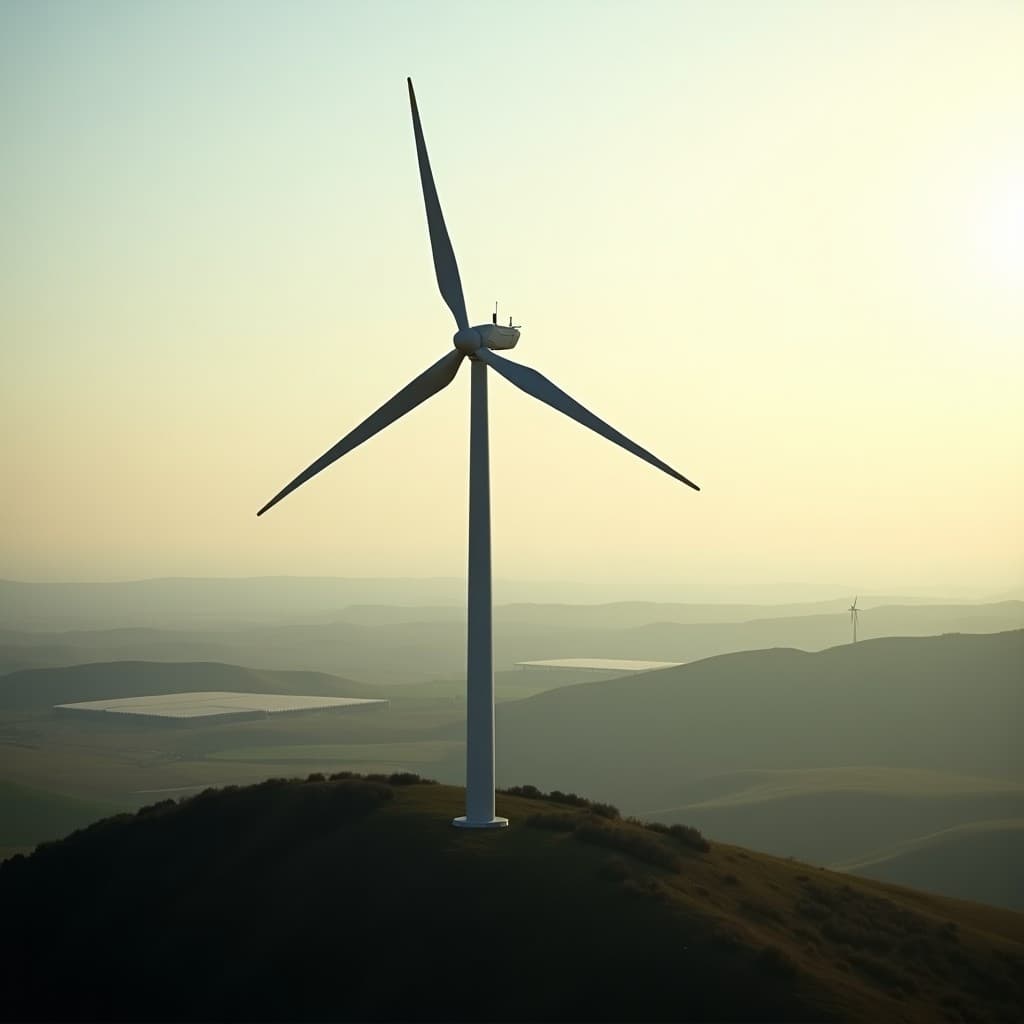
For Molise, a region where wind energy has been positioned as a primary renewable development strategy, the solar boom creates a strategic challenge. The region's continental climate inland and Mediterranean coastal zone have made it suitable for both wind and solar development, but foreign coverage of European energy markets has consistently emphasised solar's cost advantage and rapid scaling. Molise's wind sector, while operational, competes for investment capital and policy support in a landscape increasingly dominated by solar projects.
The CleanTechnica data shows the scale of the shift. Germany generated 503 gigawatt-hours on May 28; Spain 265 GWh on May 29; France 179 GWh on May 28. Italy's record, while not specified in the outlet's headline figures, places the country among Europe's solar leaders. This acceleration matters for Molise because European energy policy, shaped increasingly by Brussels and market forces, tends to follow the path of lowest cost and fastest deployment.
Wind energy in Molise has been developed over the past two decades as part of the region's attempt to create a modern industrial base in an economy otherwise dependent on agriculture and small manufacturing. Foreign coverage of Italian renewable energy has treated wind farms in the South as part of Italy's broader energy transition, but solar's surge threatens to redirect investment northward and toward regions with better solar irradiance profiles. Molise's wind assets remain valuable, but the competitive advantage they offered is narrowing.
The regional consequence is not yet dramatic, but it is real. If European capital increasingly flows toward solar projects in sunnier regions—Puglia, Sicily, Basilicata—Molise's wind sector risks becoming a mature, stable but non-growing part of the regional economy. The region's depopulation and emigration of the young are partly driven by lack of economic opportunity; renewable energy was supposed to create new jobs and investment. The solar boom, paradoxically, may accelerate the shift of that opportunity away from Molise toward regions with better solar conditions.