
PIEMONTE
Stellantis hunts mass-market EV as rivals race downmarket
Turin-based automaker faces pressure to deliver affordable electric cars while competitors expand low-cost offerings
Lorenzo Ferraris1,247 wordsEdition №5Friday, 5 June 2026 — Edition № 5
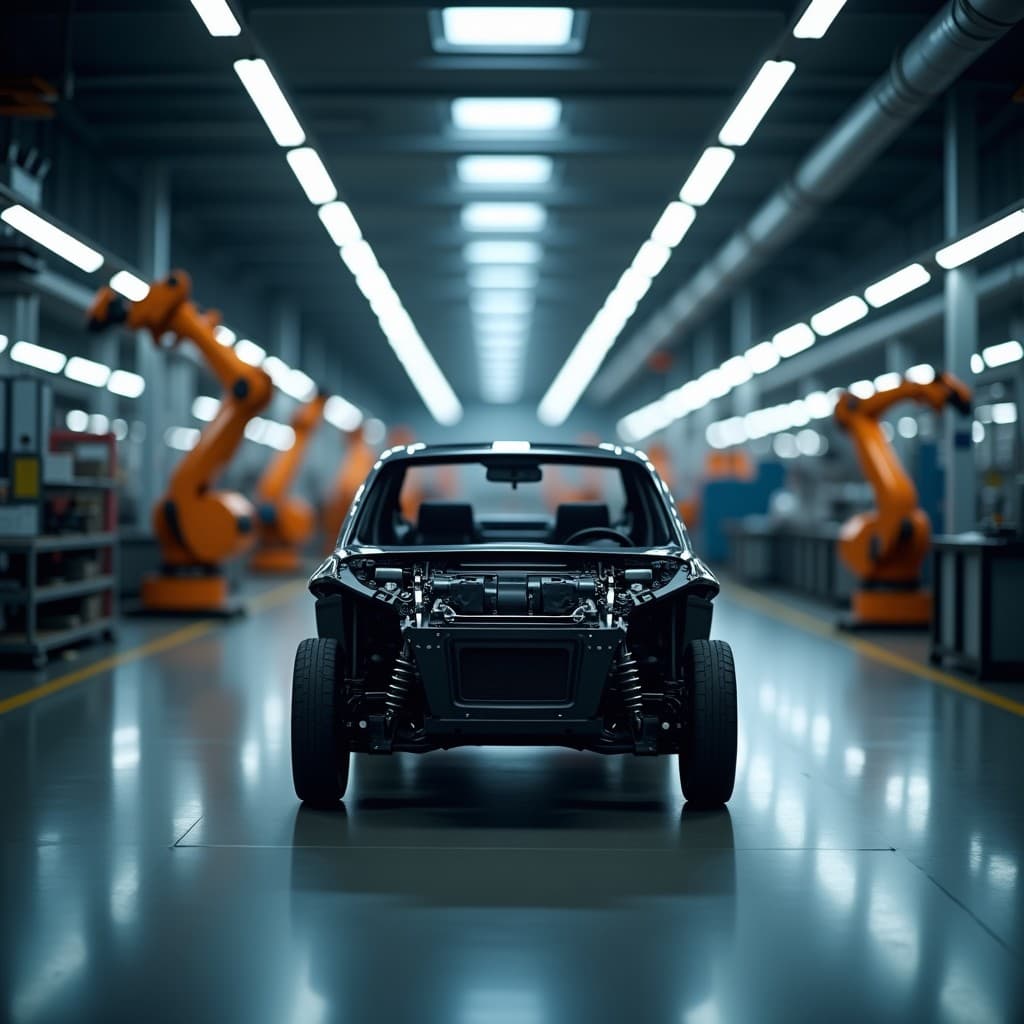
Stellantis faces a critical test in the mass-market electric vehicle segment, according to Automotive News. The automaker, which operates major plants across Piemonte and France, must prove it can deliver a competitive €15,000 EV—a price point where profit margins thin and manufacturing efficiency becomes paramount. The question, as Automotive News framed it in its Daily 5 report this week, is whether Stellantis can translate its expertise in performance and premium vehicles into affordable electrified cars for ordinary buyers.
The pressure is acute. Chinese competitors including BYD and Geely have already captured significant share in the sub-€20,000 segment, according to Automotive News coverage of the global EV market. European rivals are moving aggressively downmarket: Volkswagen, Hyundai, and Kia have all launched or committed to low-cost electric models. For Stellantis, the stakes extend beyond market share. A credible mass-market EV is essential to meeting EU emissions targets and avoiding penalties that could reshape the company's European operations.
The Piemonte region, home to Stellantis' Italian engineering and design operations, sits at the centre of this challenge. Turin's automotive cluster—suppliers, engineering firms, and design houses—has historically built its reputation on premium and mid-market vehicles. Retooling that ecosystem to compete in the cost-conscious EV segment requires not just new product platforms but a fundamental shift in how the company approaches manufacturing and supply-chain economics.
Stellantis' struggle with affordable electrification reflects a broader industry tension. Traditional automakers built their profit models on internal combustion engines, where scale and efficiency in the mid-to-premium segments generated the margins needed to fund R&D. Electric vehicles invert that logic: the lowest-cost models often carry the thinnest margins, yet they are essential to volume growth and regulatory compliance. Automotive News noted this week that U.S. auto sales have remained steady despite inflation and falling consumer confidence, cushioned by wealthier buyers and AI-driven stock gains—but those conditions mask underlying fragility in the mass market.
The €15,000 target is not arbitrary. It represents the psychological and practical threshold below which European buyers begin to see electric vehicles as genuine alternatives to petrol cars, rather than premium purchases. At that price, a family sedan or compact hatchback becomes accessible to middle-income households across Italy and the EU. But manufacturing at that price point while maintaining acceptable profit margins and quality standards is a discipline Stellantis has not yet demonstrated.
Stellantis' recent capital commitments suggest the company understands the stakes. Automotive World reported this week that Stellantis has committed more than €1 billion to produce three new Peugeot electric and hybrid models at its Mulhouse plant in Alsace, based on the new STLA One modular platform. That investment signals a shift toward volume electrification across the group's European brands. Yet the Mulhouse commitment, while substantial, is concentrated in France and does not directly address Italian manufacturing capacity or the role Piemonte will play in the company's EV transition.
Turin's automotive sector has already endured decades of contraction. The city that once produced millions of Fiat vehicles annually has seen employment in car manufacturing fall sharply. Stellantis' Italian plants—including the Mirafiori facility in Turin—have been repositioned toward specialty production and engineering rather than high-volume manufacturing. A mass-market EV strategy could either revitalize those plants with new volume or accelerate their decline if Stellantis chooses to concentrate EV production in lower-cost regions.
The regional supply chain faces similar uncertainty. Piemonte's automotive suppliers have historically served premium and performance segments, where they command technical expertise and pricing power. A shift to mass-market EVs would require those suppliers to compete on cost and efficiency—a different competitive terrain. Some may struggle; others may find opportunity in the transition. The outcome depends partly on Stellantis' manufacturing strategy and partly on whether the company can leverage Piemonte's engineering talent to design cost-efficient electric platforms.
Stellantis has also signalled ambitions in commercial vehicles. Carscoops reported this week that Stellantis Pro One, the group's commercial vehicle unit, aims to be the number-one commercial vehicle company in the world by 2030 and will unveil an autonomous delivery concept in September. That strategy could offer a secondary path to volume electrification: commercial fleets, particularly in urban logistics, are increasingly electrified and represent a less price-sensitive market than consumer cars. If Stellantis can establish leadership in electric commercial vehicles, it could generate both volume and margin while building the manufacturing and supply-chain expertise needed for consumer EVs.
The competitive landscape is tightening. Automotive News reported this week that Alfa Romeo, another Stellantis brand, plans to launch a compact hatchback as part of a broader growth strategy. That vehicle, if priced aggressively and offered with electric or hybrid powertrains, could serve as a test case for Stellantis' ability to compete in the mass market. Alfa Romeo has historically occupied the premium-compact segment in Europe; repositioning it downmarket would signal a fundamental shift in how Stellantis deploys its brand portfolio.
Regulatory pressure is also mounting. The EU's emissions standards require that new-car fleets average roughly 93 grams of CO2 per kilometre by 2025, with further tightening expected. Meeting those targets without a credible mass-market EV offering is increasingly difficult. Stellantis faces potential fines if its fleet average exceeds the limit, and those fines could exceed the profit margins on any individual vehicle. That calculus makes the €15,000 EV not a luxury but a necessity.
The timing is critical. Battery costs have fallen significantly over the past five years, according to multiple industry analyses cited in Automotive News coverage, but they remain the largest cost component in an affordable EV. Stellantis must reach production scale before battery costs stabilize or begin to rise again. Delays in launching a competitive mass-market EV could leave the company permanently disadvantaged against rivals that have already captured cost curves and supply-chain positions.
For Piemonte, the outcome carries broader implications. The region's economy has diversified since the decline of mass-market automotive production, with strength in aerospace, food, banking, and design. Yet automotive manufacturing remains culturally and economically significant. A successful Stellantis pivot to mass-market electrification could anchor new investment and employment in Turin and surrounding areas. Failure could accelerate the hollowing-out of the region's automotive base and push further consolidation toward France and other lower-cost EU regions.
Stellantis has not yet announced a specific timeline or production location for the €15,000 EV. That silence is itself telling: the company is likely still evaluating where to build such a vehicle and whether existing Italian plants can be retooled cost-effectively. Those decisions will shape not just Stellantis' competitive position but the future of automotive manufacturing in Piemonte.