
ECONOMY
Stellantis charts Italian plants' role in turnaround
Automaker assigns specific production roles as CEO signals partnerships ahead for Maserati and electric vehicles
Lorenzo Ferraris387 wordsEdition №23Monday, 22 June 2026 — Edition № 23
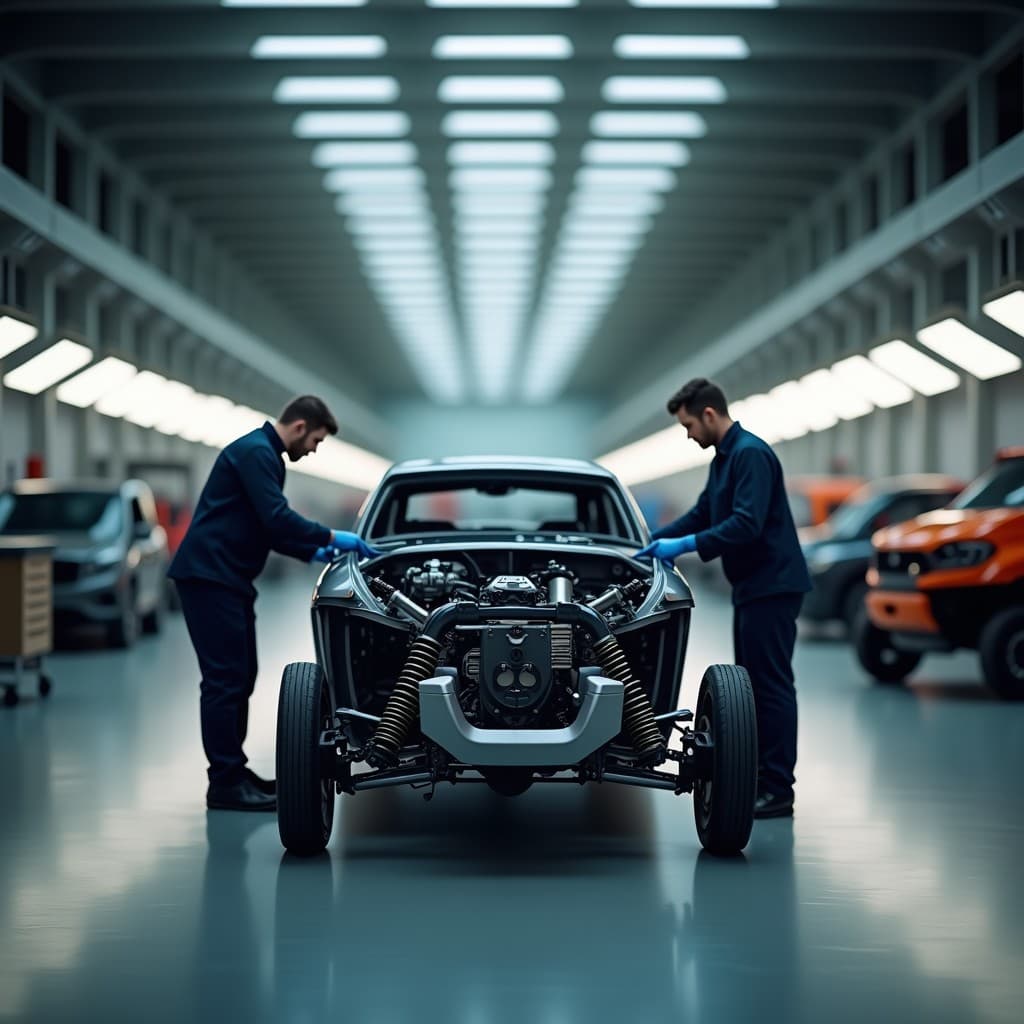
Stellantis has assigned defined roles to its Italian plants as part of a comprehensive turnaround plan, according to Automotive News. The move reflects the Dutch-Italian automaker's effort to streamline production across Europe and position its Italian operations for the shift toward electric vehicles and premium brands.
CEO Antonio Filosa told Automotive News on June 17 that the company intends to strike more partnerships in Italy, particularly for Maserati and electric-car development. Reuters reported on June 18 that Maserati is refreshing its lineup ahead of an expected strategic reset, with two unnamed Stellantis partners under discussion for the luxury brand's future.
Stellantis' clarity on Italian plant assignments marks a shift from earlier uncertainty about the group's European footprint. The company, formed from the 2021 merger of Fiat Chrysler and France's PSA, has faced pressure to define which facilities would focus on combustion engines, battery assembly, and premium production as the industry electrifies.
The announcement carries weight for Piemonte, home to Stellantis' Turin operations and a region long dependent on automotive manufacturing. Automotive News reported that the company is pursuing external partnerships rather than absorbing all development in-house, a strategy that could open opportunities for local suppliers and contract manufacturers across the region's established industrial ecosystem.
Stellantis also holds a 9.5 per cent stake in solid-state battery startup Factorial, according to a June 19 Reuters filing. That investment signals the company's commitment to next-generation battery technology, a capability that could anchor future electric-vehicle assembly in northern Italy if paired with the Italian plant assignments Filosa outlined.
The timing coincides with broader European automotive pressure. Automotive World reported on June 19 that European light vehicle makers face long-term structural risk as the continent's traditional strength in internal combustion engines erodes. For Turin and Piemonte's industrial base, Stellantis' partnership strategy—rather than consolidation—may preserve manufacturing depth, though the specific roles assigned to Italian plants remain undisclosed.