
PIEMONTE
Stellantis pins turnaround on quality as Turin braces for investment test
Automaker's new model blitz and supply partnerships signal ambition, but Piedmont's industrial base waits for concrete commitment
Lorenzo Ferraris1,487 wordsEdition №4Thursday, 4 June 2026 — Edition № 4
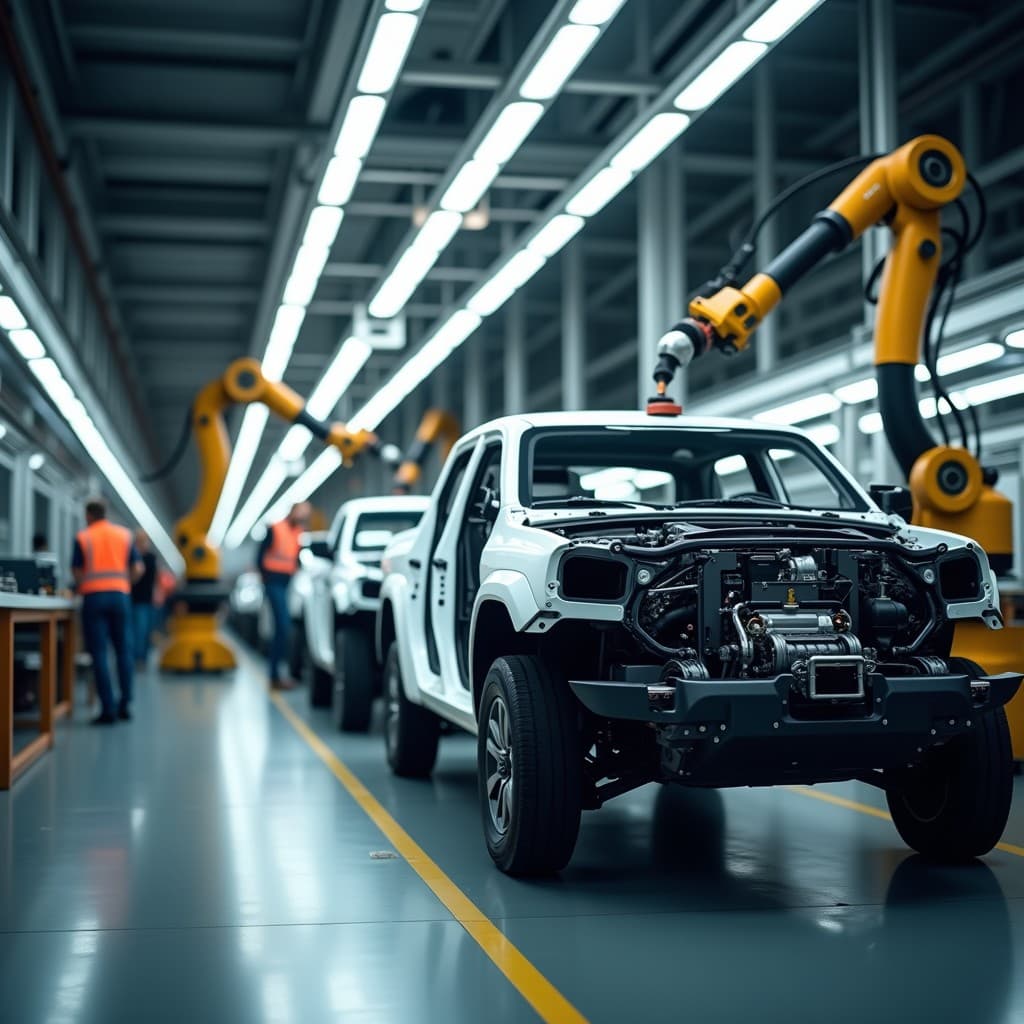
Stellantis is staking its turnaround on a fundamental shift: quality over volume. Automotive News reported this week that the automaker's recovery plan hinges on reversing customer perception of quality, a challenge that extends far beyond new model launches. The group has announced 11 new commercial vehicles by 2030 and secured TotalEnergies as its exclusive lubricants supplier across all 10 brands—moves designed to signal operational discipline and long-term confidence to the market.
The supply deal with TotalEnergies, announced in late May, covers co-branded Quartz MOPAR and Quartz EV3R MOPAR SUSTAINera oils approved for the new FPW specification. This level of integration—a single supplier across Jeep, RAM, Peugeot, Citroën, Opel, Vauxhall, Abarth, Alfa Romeo, Lancia and Fiat—suggests Stellantis is moving to tighten control over component quality and standardise manufacturing processes. The commercial-vehicle unit's product roadmap, detailed by the Wall Street Journal, commits to electrified and hybrid variants across multiple segments, signalling that the group intends to compete in every major market tier through 2030.
Yet the real test for Piedmont lies in where Stellantis anchors its European manufacturing strategy. In early June, the group committed more than €1 billion to Peugeot production at Mulhouse in Alsace, deploying the new STLA One modular platform for three electric and hybrid models. Automotive World reported the investment as a deepening of Stellantis's France commitment—a signal that French plants, not Italian ones, are receiving priority capital for the next generation of vehicles.
Turin's automotive cluster has long depended on Stellantis for both direct employment and supply-chain density. The group operates major plants across Piedmont, including the Mirafiori complex in Turin itself, which has historically served as a hub for Fiat and Alfa Romeo production. The region's engineering and component suppliers—firms that design drivetrains, electrical systems, and interior modules—rely on stable, high-volume orders from Stellantis to sustain their own workforces and investment cycles.
Stellantis's quality crisis has rippled through this ecosystem. When customer confidence erodes, production volumes contract, and component suppliers face reduced demand and margin pressure. The Automotive News editorial acknowledged that the group is 'saying the right things' in its turnaround plan—but cautioned that execution on quality will determine whether the market believes the strategy. For Turin suppliers, this translates into months of uncertainty: if Stellantis fails to restore brand perception, order books shrink, and the region's industrial base contracts with them.
The commercial-vehicle unit's expansion offers one avenue for regional growth. Stellantis's commercial-vehicle operations include plants in Italy that produce light commercial vehicles and vans. The Wall Street Journal's reporting on 11 new models by 2030 did not specify production locations, but the segment has historically been less subject to the same quality perceptions that plague the consumer brands. If Turin plants secure a share of this new product portfolio, the region could offset weakness in passenger-car production.
The TotalEnergies partnership signals a different kind of opportunity. Lubricants and fluids are not manufactured at vehicle assembly plants; they are sourced from dedicated suppliers. However, the exclusivity of the deal—one supplier across all 10 brands—means that Stellantis is consolidating its supply base rather than expanding it. For Piedmontese firms that currently supply lubricants or related fluids to Stellantis, this represents a threat: they may lose contracts to TotalEnergies' existing supply chain.
The Mulhouse investment is the most telling signal. Stellantis committed €1 billion to French production of new Peugeot models on the STLA One platform. The STLA One is Stellantis's new modular electric-vehicle architecture, designed to underpin multiple brands and segments. By choosing Mulhouse—a French plant in Alsace—for this strategic investment, Stellantis is signalling that France, not Italy, is the priority location for next-generation vehicle production. Automotive World reported the commitment as part of Stellantis's broader deepening of French investment, a pattern that raises questions about the future scale of Italian production.
Turin has faced this dynamic before. In the 1990s and 2000s, Fiat's declining market share in Europe led to production cutbacks in Italy while the group invested in plants in Poland, Serbia, and other lower-cost locations. The Mirafiori plant, once the heartland of Italian automotive manufacturing, shrank from tens of thousands of workers to a fraction of that number. Stellantis, formed in 2021 from the merger of Fiat Chrysler and PSA, inherited this legacy: Italian plants are older, more expensive to operate, and subject to higher labour costs than many European competitors.
The group's current strategy appears to be consolidating European production around a smaller number of high-efficiency plants. Mulhouse, a modern facility with strong labour relations and proximity to German supply chains, fits this profile. Italian plants must compete for allocation of new products on the basis of cost, quality, and logistics. The Mirafiori complex has invested in modernisation—including new battery-assembly capacity for electric vehicles—but whether these upgrades are sufficient to secure a share of the STLA One platform remains unclear.
Foreign business press coverage of Stellantis has grown increasingly sceptical about the group's ability to execute its turnaround. Reuters and the Financial Times have both reported on the automaker's struggle to restore profitability amid weak demand in Europe and intensifying competition from Chinese EV makers. The quality crisis is not merely a perception problem; it reflects deeper issues in manufacturing discipline, supply-chain coordination, and product development. The TotalEnergies deal and the commercial-vehicle expansion are steps toward addressing these issues, but they do not yet constitute a comprehensive turnaround.
For Piedmont, the immediate concern is employment stability. Stellantis employs roughly 10,000 workers directly in the region, with another 30,000 to 40,000 in the supply chain. A sustained decline in Italian production would trigger job losses across multiple tiers of the economy. Local banks—Intesa Sanpaolo, UniCredit, and regional savings banks—have significant exposure to automotive suppliers through lending and equity stakes. A contraction in the sector would affect credit quality and profitability across the financial system.
The regional government and business associations have long advocated for industrial policy measures to support automotive manufacturing in Piedmont. These include tax incentives for plant modernisation, subsidised training programmes, and preferential treatment in public procurement. However, such measures face constraints under EU state-aid rules, which limit the extent to which member states can subsidise particular industries or regions. The European Commission has scrutinised Italian industrial policy closely, particularly in sectors where state ownership or subsidies are significant.
Stellantis's investment decisions will ultimately be driven by market logic, not regional pleading. The group must allocate capital to the plants and products that offer the highest return on investment. If Italian plants cannot compete on cost and quality with French, German, or Eastern European alternatives, capital will flow elsewhere. The Mulhouse commitment suggests that Stellantis's management believes French production offers better economics for the next generation of vehicles.
The Alfa Romeo compact hatchback, announced by Automotive News in late May, offers a potential counterweight to this narrative. Alfa Romeo is a quintessentially Italian brand, and the compact hatchback segment is one of Europe's largest. If Stellantis commits to producing this vehicle in Italy—particularly at a plant in the north—it would signal confidence in Italian manufacturing for core European segments. However, the announcement did not specify production location, leaving the question open.
The broader context is Stellantis's struggle to define its brand portfolio in an era of electrification and consolidation. The group owns 10 brands, each with distinct heritage and market positioning. Rationalising this portfolio—deciding which brands survive, which are merged, and which are retired—is a multi-year process. For Turin, the outcome matters enormously: if Fiat and Alfa Romeo are retained as core European brands, Italian plants will likely remain central to the group's strategy. If either brand is marginalised or merged, production in Piedmont will contract.
The quality turnaround that Automotive News identified as the crux of Stellantis's recovery plan is therefore inseparable from the group's manufacturing footprint decisions. Quality requires investment in modern plants, skilled workforces, and supply-chain discipline. Stellantis must decide whether Italian plants can deliver on these requirements at a cost that justifies capital allocation. The €1 billion Mulhouse investment suggests the group believes French plants can. Turin's industrial future depends on whether the group reaches a different conclusion about Piedmontese facilities.