
PIEMONTE
Stellantis tests solid-state cells in Dodge Charger as battery race intensifies
Turin-based automaker integrates Factorial technology into development vehicle; road testing begins
Lorenzo Ferraris418 wordsEdition №15Sunday, 14 June 2026 — Edition № 15
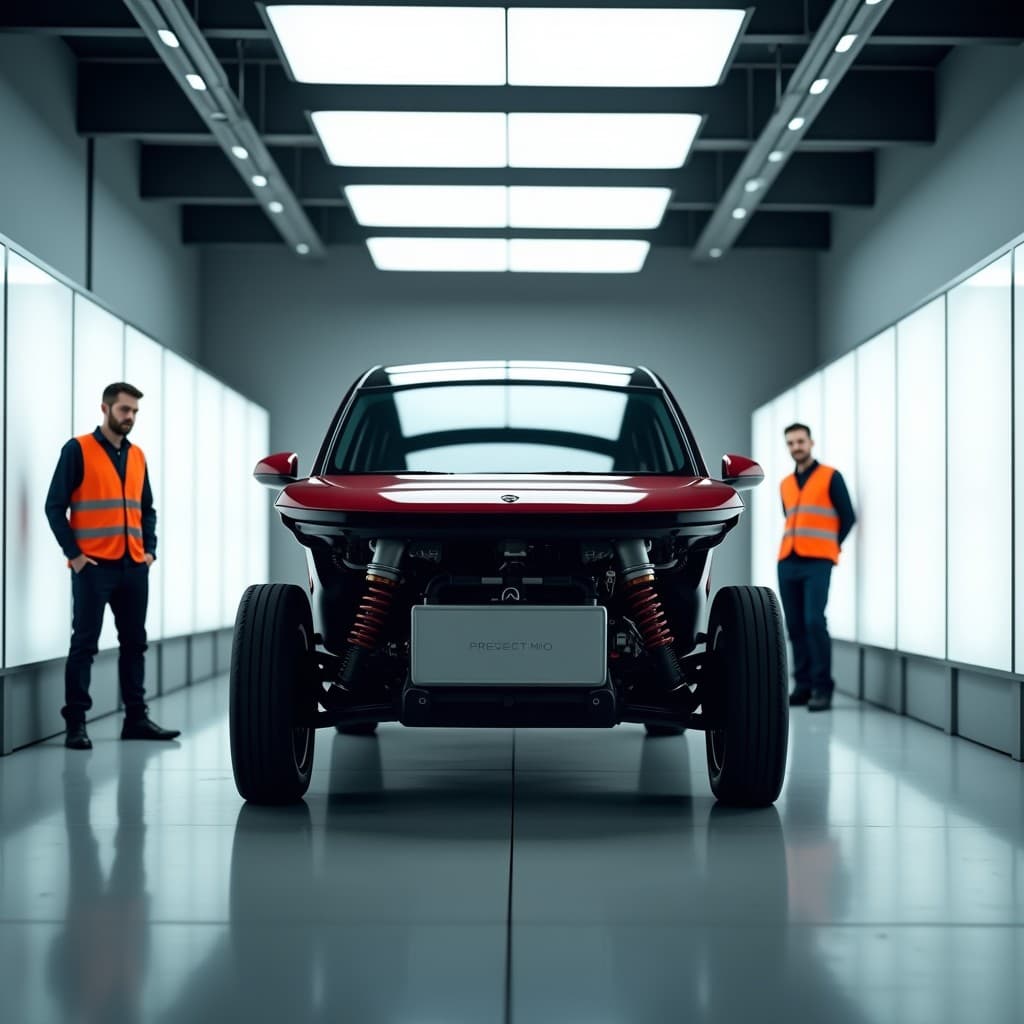
Stellantis has integrated solid-state battery cells from Factorial Energy into a Dodge Charger Daytona development vehicle and launched a road-testing program to evaluate performance, safety and reliability, according to Design and Development Today. The automaker said the move marks the first integration of solid-state cells into a Stellantis vehicle. The battery uses Factorial's FEST (Factorial Electrolyte System Technology) platform, which the supplier has positioned as a path to higher energy density and faster charging.
The test represents Stellantis' latest push into next-generation battery chemistry as the industry competes to reduce weight and cost while extending driving range. The Turin-based automaker, which produces vehicles across North America and Europe, has positioned solid-state technology as critical to its electrification strategy. The real-world testing program will assess how the cells perform under operational stress—a crucial step before any volume production commitment.
Stellantis has been transparent about its battery ambitions in recent months. In January 2026, the company announced a joint venture with Samsung to develop solid-state cells at a facility in the United States, signalling that the technology is no longer purely experimental. The Dodge Charger Daytona platform, a high-performance electric vehicle, provides a demanding test case: the car's weight and power demands will stress the battery's thermal management and cycle life in ways that conventional lithium-ion cells struggle to match.
For Piemonte's automotive sector, the test carries indirect significance. While Stellantis' main battery development occurs in the United States and through partnerships with Samsung and other suppliers, Turin remains central to the group's powertrain engineering and platform architecture. The solid-state push reflects a broader industry consensus that conventional lithium-ion technology has reached a plateau in energy density and cost reduction—a view shared by Tesla, BMW, Nissan and Toyota, all of whom have announced solid-state timelines.
The timeline for Stellantis' solid-state deployment remains unclear. Design and Development Today did not specify when road testing would conclude or when the company might move toward limited production. Typically, such programs run 18 to 36 months before manufacturers commit to tooling. Industry analysts have suggested that mass-market solid-state vehicles are unlikely before 2028 or 2029, giving Stellantis and its competitors time to validate the technology at scale.