
PIEMONTE
Stellantis Moves Solid-State Battery to the Road
Turin automaker tests Factorial technology in Dodge Charger as EV range race intensifies
Lorenzo Ferraris487 wordsEdition №13Friday, 12 June 2026 — Edition № 13
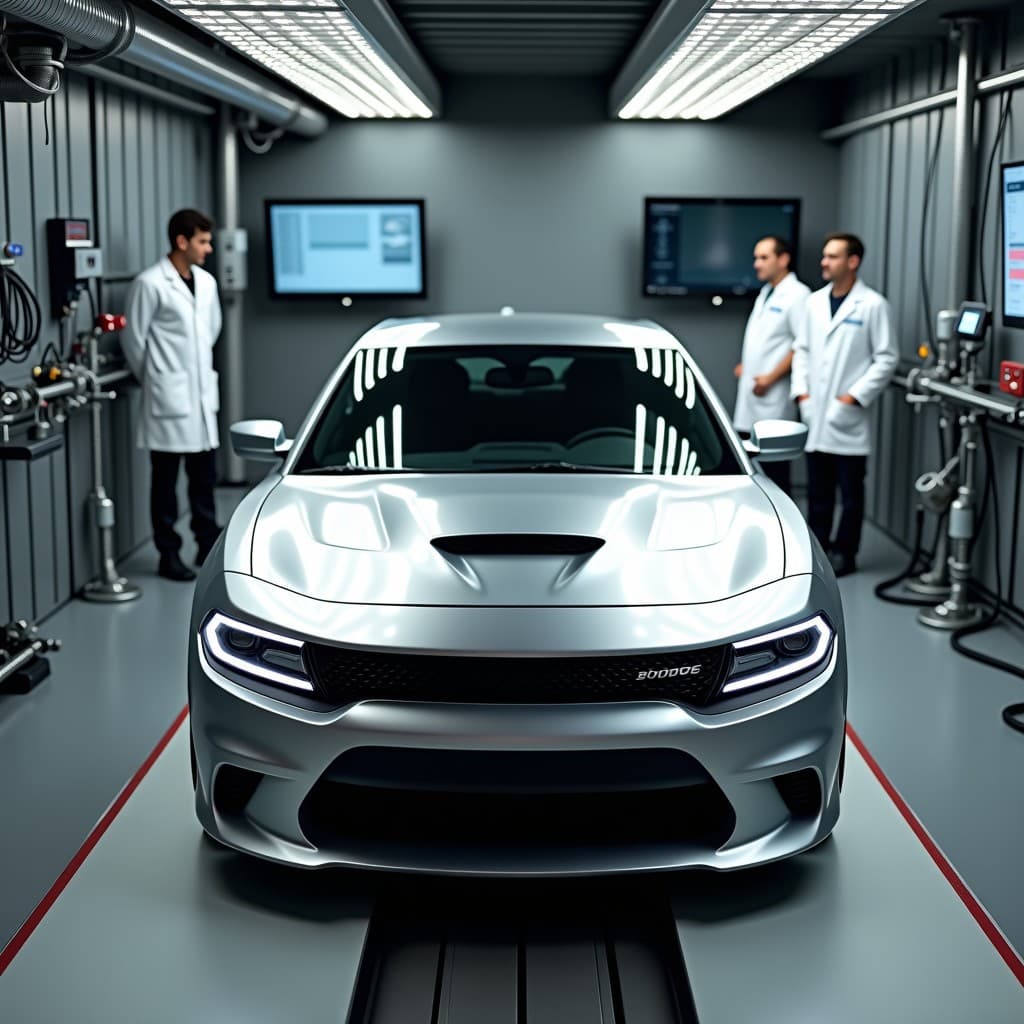
Stellantis and battery developer Factorial have begun testing solid-state battery cells in a Dodge Charger Daytona development vehicle, according to Autoweek and Design and Development Today. The program aims to verify performance, safety and reliability of Factorial's FEST (Factorial Electrolyte System Technology) cells under real-world driving conditions. The move represents a significant step forward for the Turin automaker, which has staked its EV strategy partly on next-generation battery chemistries to compete with rivals on range and charging speed.
Solid-state batteries have long been seen as the next frontier in electric vehicle technology, offering potential gains in energy density and thermal stability. However, the transition from laboratory prototypes to vehicles operating on public roads remains a critical test. For Stellantis, which has struggled to match Tesla's EV sales momentum and faces mounting pressure on margins, the technology could offer a path to a more competitive mass-market offering. The company has previously indicated it is hunting for a €15,000 EV to capture price-sensitive buyers, according to earlier reporting from the Financial Times.
The road-testing program signals Stellantis' intent to move faster on solid-state integration than some competitors. General Motors and Toyota have also announced solid-state battery programs, but timelines for production vehicles remain unclear. Success in this phase could accelerate Stellantis' timeline for bringing the technology to customers, though the company has not yet disclosed production targets or vehicle platforms beyond the current test bed. The stakes are high: solid-state batteries could reshape the EV cost curve, but manufacturing scale-up and durability in the field remain unproven.
Factorial, the battery developer partnering with Stellantis, has positioned itself as a supplier to multiple automakers. The company's FEST technology is designed to enable higher energy density and faster charging without the thermal risks associated with conventional lithium-ion cells. Autoweek reported that the Dodge Charger Daytona test vehicle is now undergoing public-road testing, a phase that typically lasts months and generates the real-world data needed to inform production decisions.
For Piemonte's automotive sector, the news carries both opportunity and pressure. Turin remains Stellantis' global engineering hub, and solid-state battery development has implications for the region's supply chain and skilled workforce. If the road tests prove successful, the company may accelerate hiring in battery engineering and thermal management roles. Conversely, if the program stalls, it could signal a shift in Stellantis' investment priorities away from internal battery development toward partnerships or acquisitions.
The broader context is urgent: the European automotive industry is losing ground to Chinese competitors in EV battery technology and manufacturing. Stellantis' move to test solid-state cells suggests the company is aware of the timeline pressure. Reuters has reported that European OEMs are increasingly turning to advanced battery chemistries as a way to offset lower EV volumes compared to Tesla and Chinese makers. Whether Stellantis can translate laboratory success into production vehicles at scale remains the central question for the company's competitive position over the next five years.