
ABRUZZO
Florence works sever Abruzzo's rail link to the south
Scheduled maintenance at Florence's central station will disrupt connections for mountain communities already struggling with transport isolation
Marco Di Sante368 wordsEdition №38Tuesday, 7 July 2026 — Edition № 38
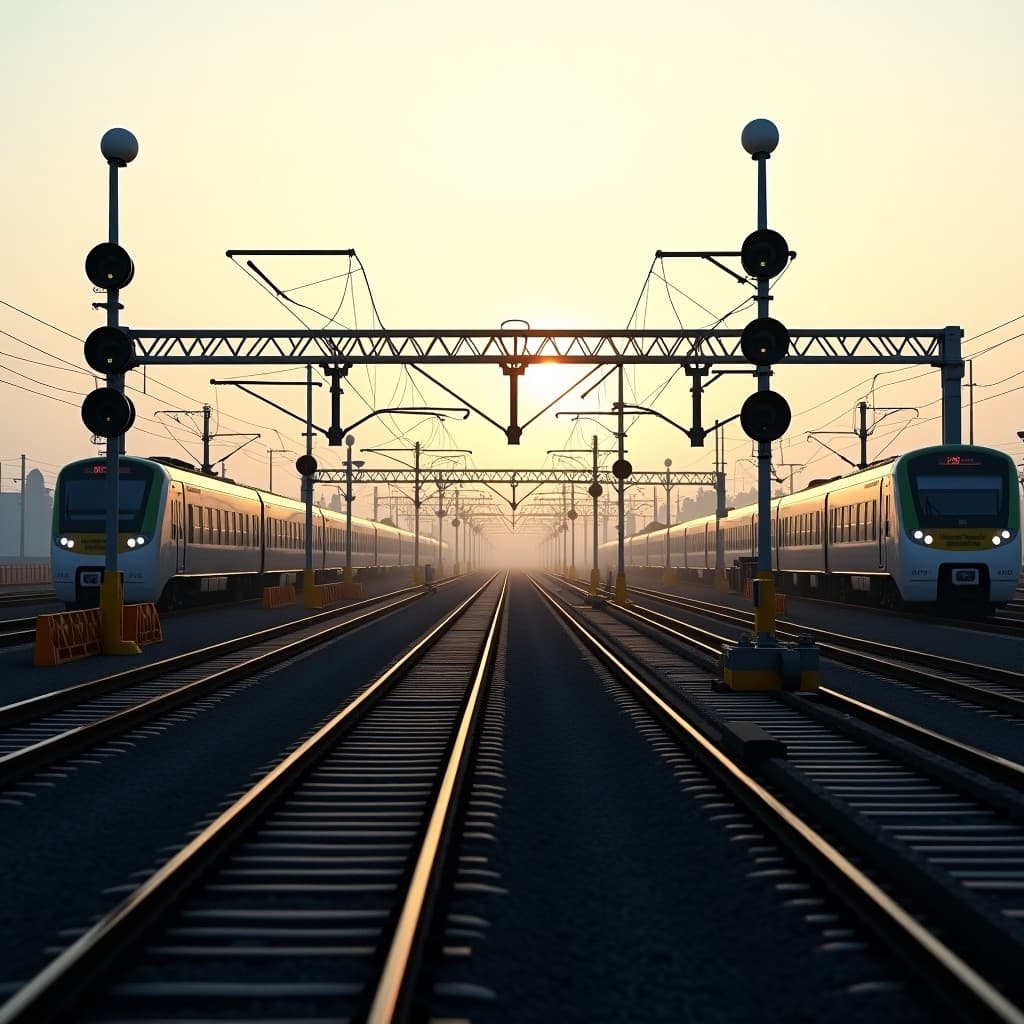
Italy's rail system will face significant disruption beginning this week as scheduled maintenance at Florence's central station interrupts the line connecting northern and southern Italy. According to transport reports, passengers should expect cancellations and delays of up to three hours as the works proceed through July. The maintenance, described as necessary infrastructure work, will effectively sever the main rail artery between the industrial north and the agricultural and tourism-dependent south.
For Abruzzo, already positioned at the margin of Italy's transport networks, the disruption carries particular weight. The region's mountain interior relies on rail connectivity to reach markets in Campania and Calabria, to access medical facilities in Naples, and to move goods from its pharmaceutical and manufacturing sectors southward. The disruption coincides with summer travel season, when both tourist flows and commercial freight depend on predictable routing. Foreign coverage of Italy's transport infrastructure has repeatedly highlighted how regional disparities in connectivity compound the North–South economic divide; this week's maintenance will make that gap tangible.
The Guardian and other international outlets have documented how Italy's transport fragmentation—aging infrastructure, competing regional interests, and deferred maintenance—constrains economic mobility and deepens peripheral isolation. Abruzzo, positioned between Rome's sphere and the Mezzogiorno, absorbs these inefficiencies acutely. A three-hour delay is not merely an inconvenience; it is a structural reminder of how the region's geographic position, combined with infrastructural neglect, limits its economic reach.
The Florence works are necessary, and maintenance cannot be indefinitely deferred. Yet the timing and scope of the disruption—effectively dividing Italy into two separate rail zones—reveals the difficulty of managing infrastructure on a peninsula where north and south remain economically and logistically estranged. For Abruzzo's mountain communities, already dependent on road transport and limited rail options, the closure reinforces a pattern: investment and connectivity flow northward, while the interior remains peripheral.
This week's disruption will pass. But it underscores a longer problem that foreign observers have noted in their coverage of Italian regional development: the absence of a coherent national transport strategy that prioritizes connectivity over regional fiefdoms. Abruzzo's position—not northern enough to benefit from the Po Valley's dense networks, not southern enough to be prioritized in Mezzogiorno investment schemes—leaves it vulnerable to disruptions that more central regions can absorb. The three-hour delay is a symptom of a deeper structural fragmentation that no single maintenance project can explain, but which every disruption illuminates.