
ECONOMY
Tuscany's leather workers strike as 830 firms close since 2019
Production workers in Florence prepare July 9 action amid supply chain restructuring and mass closures in the region's core industry
Costanza Bardi456 wordsEdition №35Saturday, 4 July 2026 — Edition № 35
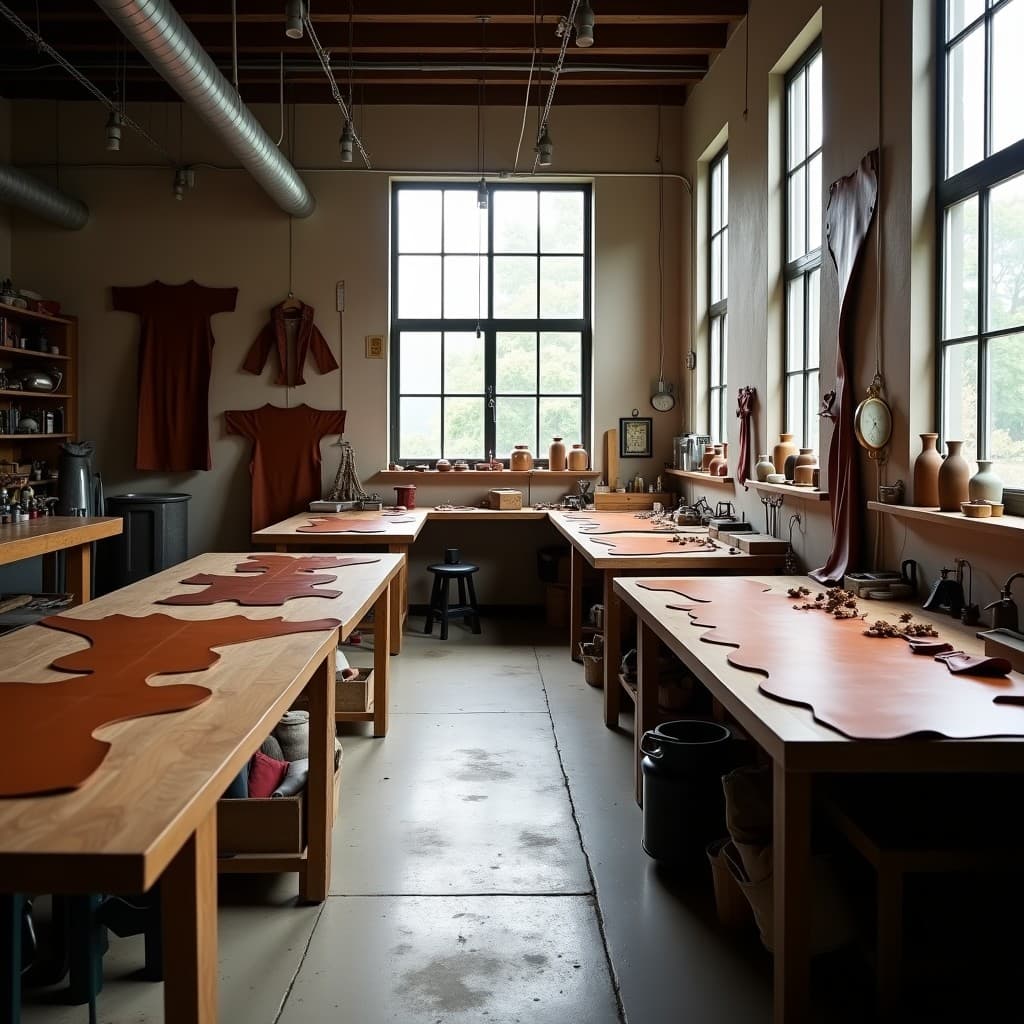
According to Fashion United, production workers in Tuscany are preparing to strike on July 9 as calls for supply chain restructuring escalate. The action comes against a backdrop of significant industrial contraction: local trade unions report that 830 leather goods companies in the province of Florence have closed since 2019, affecting approximately 7,000 employees. The scale of the closure suggests a structural shift in the region's fashion manufacturing base rather than cyclical downturns.
Florence and its surrounding provinces have long been the backbone of Italy's luxury leather goods production, supplying major international brands with finished and semi-finished products. The loss of nearly a third of the province's leather companies in seven years represents a rupture in supply chains that sustained generations of skilled craftspeople and their families. Fashion United's reporting indicates that the closures reflect broader pressures on European manufacturing—labour costs, automation, and the shift of production to lower-cost jurisdictions—rather than demand collapse alone.
The strike signals workers' determination to force a reckoning with the supply chain's future shape. The unions' call for restructuring suggests demands for intervention at both regional and national levels to stabilise employment and preserve manufacturing capacity. For Tuscany, the moment tests whether the region can retain its identity as a production centre or whether it will cede that role entirely to lower-cost competitors abroad, becoming instead primarily a heritage and tourism destination.
The closure rate in Florence's leather sector outpaces broader Italian manufacturing decline, suggesting sector-specific vulnerabilities. Leather goods production has been historically concentrated in small and medium enterprises, many family-owned, that rely on proximity to suppliers and skilled labour pools. The dispersal of closures across 830 companies indicates that the problem is not the failure of a few large firms but a thinning of the entire ecosystem. When suppliers close, remaining producers face higher input costs or longer supply chains; when craftspeople leave, training networks dissolve.
The international fashion press has increasingly documented the precarity of European luxury manufacturing over the past decade. As brands have sought to diversify supply chains and reduce costs, regions like Tuscany—with high labour standards and environmental regulations—have faced pressure to compete on price or cede volume to Asia and Eastern Europe. The trade-off between preserving heritage craftsmanship and maintaining economic viability has sharpened in recent years, particularly for mid-market producers who lack the brand power of luxury houses to command premium pricing.
The July 9 strike represents a moment of visibility for a structural crisis that has been unfolding quietly. The unions' demands for restructuring will likely centre on whether the Italian state and regional government can support the transition of remaining firms—through investment in technology, retraining, or market access—or whether they can only manage decline. For workers and their families, the strike is an assertion that Tuscany's leather tradition is worth preserving; for the region's economy, the outcome will shape whether manufacturing survives or yields entirely to tourism and heritage consumption.