
ABRUZZO
6.2 Earthquake off Italy's Coast Revives Seismic Anxiety in Abruzzo
Strong tremor in Tyrrhenian Sea echoes regional trauma of 2009 disaster and raises questions about preparedness in mountain towns
Marco Di Sante1,347 wordsEdition №5Friday, 5 June 2026 — Edition № 5
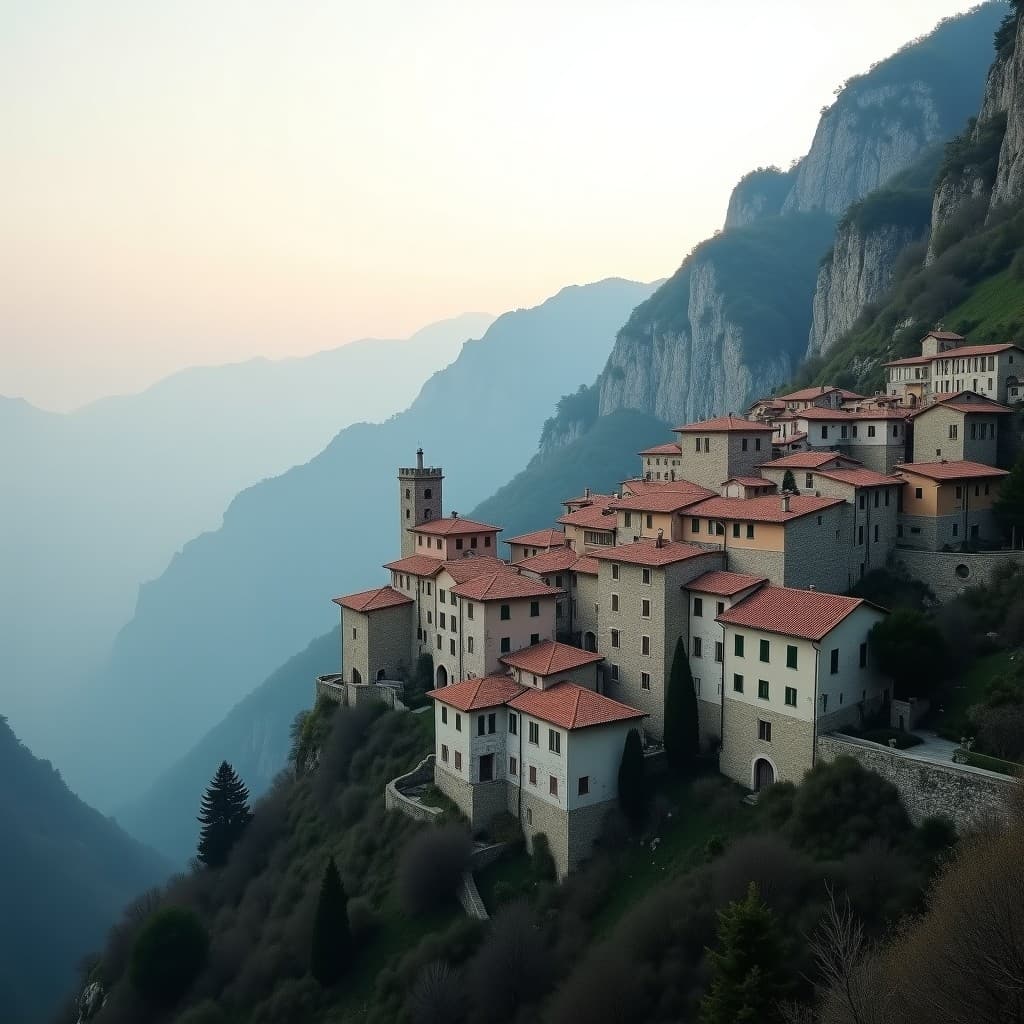
A 6.2-magnitude earthquake struck the Tyrrhenian Sea on Tuesday at 12:12 a.m. Central European time, about 11 miles southwest of Scarcelli, according to the United States Geological Survey. The temblor was felt across central Italy, including in Abruzzo, where seismic events carry the weight of recent catastrophe. The USGS noted that seismologists are reviewing available data and may revise the earthquake's magnitude as analysis continues.
In L'Aquila and the surrounding Apennine highlands, the tremor triggered immediate memory of April 6, 2009, when a 6.3-magnitude earthquake killed 309 people and left thousands homeless. That disaster, which devastated the regional capital and dozens of hill villages, remains the defining event in contemporary Abruzzo life. The 2009 quake exposed weaknesses in building codes, emergency response, and the state's capacity to manage reconstruction—failures that foreign observers have scrutinized for nearly two decades.
Tuesday's offshore event caused no reported deaths or significant damage, but it underscored the region's vulnerability to seismic activity. The Apennine chain, which runs through Abruzzo's interior, sits atop complex fault systems that periodically generate strong tremors. Foreign seismologists have long documented the region's hazard profile; the 2009 disaster prompted international review of Italian earthquake preparedness and building standards across the European Union's southern flank.
The New York Times reported the quake's location and magnitude through real-time USGS data, noting that the agency would continue to refine its analysis. The epicenter's position in the Tyrrhenian Sea, off the Campania coast, placed it at some distance from Abruzzo's population centers, but the region's geology means seismic waves travel efficiently through the Apennine massif. Residents in L'Aquila reported feeling the tremor clearly; social media and local accounts indicated brief alarm, though no structural damage was immediately confirmed.
The 2009 L'Aquila earthquake remains a touchstone in international coverage of Italian disaster management and urban resilience. Foreign correspondents and researchers have returned repeatedly to the city to assess reconstruction progress, the state's financial commitments, and the social fabric of a community fractured by sudden loss. The Guardian, the BBC, and European media outlets have documented both the physical rebuilding of L'Aquila's historic center and the slower, more difficult work of restoring civic trust and population stability.
Reconstruction in L'Aquila has proceeded unevenly. The historic city center, largely depopulated after 2009, has seen some restoration of medieval churches and civic buildings, but many residents relocated to new housing on the periphery or left the region entirely. The phenomenon reflects a broader pattern across the Apennine interior: young people migrate toward the coasts and larger cities, leaving mountain towns to age and shrink. Seismic events, even distant ones, remind those who remain of the fragility of life in these high, isolated places.
The pharmaceutical and manufacturing sectors that anchor Abruzzo's economy are concentrated in the lowlands and in towns like Teramo and Pescara, less directly exposed to the highest seismic risk. Yet the region's identity and cultural weight reside in the mountain interior—the national parks, the wolf and bear populations, the villages that cling to ridges and valleys. A major earthquake in Abruzzo proper would threaten not only lives and infrastructure but also the fragile equilibrium of rural depopulation and conservation that defines the region's current trajectory.
Foreign observers have noted that Italian earthquake preparedness, while improved since 2009, remains uneven across regions. Building codes were tightened, and the European Union supported seismic retrofitting programs, but funding has been inconsistent and the pace of work slow in poorer areas. The International Federation of Red Cross and Red Crescent Societies and other humanitarian organizations have highlighted the vulnerability of aging populations in rural Italy to sudden disasters—a concern that applies acutely to Abruzzo's mountain villages, where median age is rising and young families are scarce.
The 2009 quake also exposed tensions between state institutions and local communities. Reconstruction contracts were slow to materialize, corruption scandals emerged, and residents felt abandoned by distant bureaucracies. These fractures remain visible in Abruzzo's political landscape and in the skepticism with which mountain communities regard promises of state support. Tuesday's tremor, though minor in consequence, reactivates these anxieties and the question of whether the state would respond effectively to a major seismic event today.
Seismic science itself has advanced since 2009. The USGS and European seismic networks now provide near-real-time data and rapid magnitude estimates, allowing emergency services to mobilize quickly. Yet the challenge of earthquake prediction remains unsolved; scientists can map hazard zones and estimate probabilities, but cannot forecast when the next major tremor will strike. This uncertainty is part of the lived reality in Abruzzo, where residents know that catastrophe could return at any moment.
The region's national parks—Gran Sasso, Majella, and Monti della Laga—sit astride the same fault systems that generated the 2009 quake. These protected areas are refuges for wolves, bears, and rare alpine species, and they draw international conservation attention. A major earthquake in the high Apennines would affect not only human settlements but also these ecosystems and the scientific research programs that monitor them. Foreign conservation organizations have invested in these parks as models for rewilding and species recovery in Europe.
L'Aquila itself has become a symbol in international discourse on resilience and recovery. Urban planners, architects, and social scientists have studied the city's reconstruction as a case study in how communities rebuild after catastrophe. Some foreign observers have praised the restoration of historic monuments and the creation of new public spaces; others have criticized the slow pace, the social dislocation, and the failure to reverse population decline. Tuesday's earthquake, though distant, reminds the world that L'Aquila remains a city shaped by seismic risk.
The tremor also reflects broader patterns in Mediterranean seismicity that international geological surveys track continuously. The Tyrrhenian Sea and the surrounding regions are zones of active tectonics, and major earthquakes occur periodically along the Italian peninsula. Foreign seismologists maintain dense networks of monitoring stations and contribute data to European early-warning systems. These systems have improved response times and public communication, but they cannot eliminate the hazard itself.
In Abruzzo's mountain villages, Tuesday's tremor will likely prompt conversations about preparedness, insurance, and whether to stay or leave. These are conversations that have been ongoing since 2009, and they reflect the existential challenge facing the Italian interior: how to maintain viable communities in places where natural hazards, economic decline, and demographic aging converge. The answer remains uncertain, and each earthquake—whether distant or near—sharpens the question.