
UMBRIA
6.2 Quake off Tyrrhenian Coast Revives Seismic Anxiety
Strong earthquake near Scarcelli prompts review of Italy's inland preparedness as geological volatility persists across Mediterranean.
Niccolò Mariani1,289 wordsEdition №6Saturday, 6 June 2026 — Edition № 6
A 6.2-magnitude earthquake struck the Tyrrhenian Sea on June 1 at 12:12 a.m. Central European time, approximately 11 miles southwest of Scarcelli, Italy, according to data from the United States Geological Survey reported by the New York Times. The temblor prompted seismologists to review available data, with the possibility of magnitude revision as analysis continues. The quake's location—in the waters between the Italian mainland and Sardinia—places it within one of Europe's most seismically active zones.
The Tyrrhenian Sea sits atop a complex system of tectonic plates and fault lines, making it a recurring source of significant seismic activity. Italy's position on the boundary between the African and Eurasian plates means that earthquakes of this magnitude, while not routine, are part of the region's geological reality. The New York Times's coverage emphasized the need for continued monitoring as scientists assess whether the June 1 event represents an isolated occurrence or the beginning of a sequence.
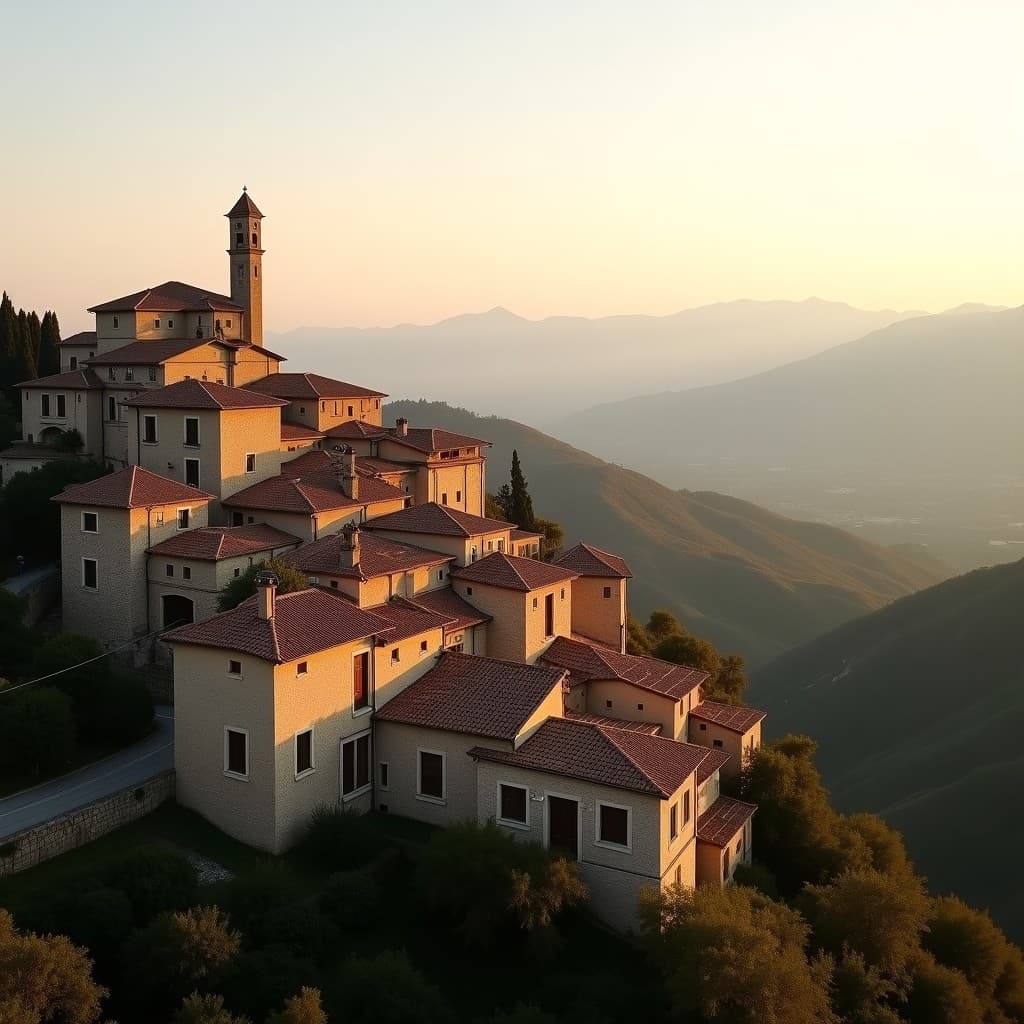
For inland Umbria, earthquakes originating in the Tyrrhenian basin carry particular significance. The region's hill towns—Assisi, Spoleto, Perugia, and dozens of smaller settlements—rest on foundations that have experienced seismic stress throughout recorded history. The region's architectural heritage, much of it medieval and Renaissance, was built with limited understanding of earthquake engineering. Recent seismic events elsewhere in central Italy have underscored the vulnerability of these structures and the communities that depend on them for tourism and cultural identity.
The Tyrrhenian Sea, which separates mainland Italy from Sardinia and Corsica, is a geologically restless body of water. The sea floor is marked by spreading centers, transform faults, and subduction zones—the geological machinery that generates earthquakes. The June 1 event, at 6.2 magnitude, falls into the range of earthquakes that can cause damage if they occur near populated areas or if they trigger secondary effects like landslides or tsunamis. The New York Times reported that the U.S. Geological Survey was monitoring the situation closely, with the possibility of magnitude revision as more data became available.
Italy's seismic history is long and consequential. The 1980 Irpinia earthquake in Campania killed nearly 3,000 people. The 1997 Umbria-Marche sequence, centered in the Apennines just east of Umbria, damaged countless medieval structures and prompted major reconstruction efforts. More recently, the 2016 Amatrice earthquake in central Italy killed nearly 300 people and devastated a historic town in the Lazio region. These events have made seismic preparedness a recurring concern for Italian communities, particularly in regions with significant architectural heritage.
Umbria's vulnerability to seismic activity stems from its position within the Apennine chain, a mountain range formed by the collision of tectonic plates. The region sits on the western edge of the Apennines, where stress accumulation and release generate earthquakes. The 1997 sequence, which included a 6.0-magnitude event, caused significant damage to churches, monasteries, and historic buildings throughout the region. Assisi's Basilica of Saint Francis, one of Christianity's most important pilgrimage sites, suffered structural damage and required extensive restoration.
The June 1 Tyrrhenian quake, though offshore, raises questions about inland Italy's preparedness for seismic events. The New York Times's reporting emphasized the ongoing work of seismologists to understand the Tyrrhenian system and predict future activity. However, prediction remains imprecise; earthquakes cannot be forecast with the accuracy that would allow communities to evacuate or take protective measures. Instead, preparedness depends on building codes, structural reinforcement, and emergency response planning.
For Umbria's small towns, seismic risk intersects with economic and cultural concerns. Many of the region's most important sites—Assisi, the Spoleto Festival venue, the medieval centers of Gubbio and Orvieto—attract international tourism and pilgrimage. Damage to these structures would have immediate economic consequences for communities that depend on visitor spending. Beyond economics, damage to heritage sites represents a loss of cultural continuity and historical meaning that cannot be fully recovered through reconstruction.
The region has made significant investments in seismic retrofitting since the 1997 sequence. Churches, monasteries, and civic buildings have been reinforced with modern structural techniques designed to allow buildings to flex and absorb seismic energy rather than collapse. However, the work is ongoing and expensive. Many smaller towns lack the resources to retrofit all their historic structures, leaving some buildings vulnerable to damage from significant earthquakes. The June 1 event, though distant, serves as a reminder of this ongoing vulnerability.
International coverage of Italian seismic activity has often focused on the dramatic and tragic—the collapse of buildings, the loss of life, the destruction of irreplaceable cultural heritage. The New York Times's reporting on the June 1 quake took a more technical approach, emphasizing the geological processes at work and the work of seismologists to understand them. This reflects a broader shift in how the international press covers natural hazards: less emphasis on disaster narratives, more on the science of risk and the work of preparedness.
The Tyrrhenian Sea's seismic activity also has implications for Mediterranean shipping and energy infrastructure. The region is crossed by major shipping routes and contains underwater pipelines carrying natural gas from North Africa to Europe. Significant earthquakes can damage these structures, disrupting commerce and energy supply. The June 1 event, though not large enough to cause such damage, underscores the need for infrastructure designed to withstand seismic stress.
For Umbria specifically, the June 1 quake revives questions about the region's long-term seismic risk and the adequacy of current preparedness measures. The region's economy depends heavily on tourism and cultural heritage. Any significant earthquake that damaged major sites would have cascading effects: reduced visitor spending, increased insurance costs, pressure on local governments to fund reconstruction. The encyclical's emphasis on human dignity and flourishing takes on concrete meaning in the context of seismic risk: communities need not just economic opportunity but also safety and the preservation of the places and structures that give their lives meaning.
Seismic monitoring in Italy has improved significantly since the 1997 sequence. The Italian National Institute of Geophysics and Volcanology maintains a dense network of seismometers that detect and locate earthquakes with precision. International collaboration, including partnerships with the U.S. Geological Survey, has enhanced data sharing and analysis. However, the fundamental challenge remains: earthquakes cannot be predicted, only prepared for. Communities must invest in resilience—in building codes, structural reinforcement, emergency response planning, and the social cohesion that allows people to recover from disasters.
The June 1 Tyrrhenian quake, while not causing reported damage, has renewed attention to seismic risk across Italy's interior. For Umbria, the event serves as a reminder of the region's geological position and the ongoing need for preparedness. The region's future depends not just on economic development and tourism, but on the ability to sustain communities through the natural hazards that are part of living in this part of the Mediterranean. The work of seismic preparedness—unglamorous, expensive, and never finished—remains essential to the region's long-term resilience and livability.