
TRENTINO-ALTO ADIGE
In the Valley of Apples, Trentino breaks Italy's wine obsession
Val di Non's cider and strudel tradition draws foreign attention as agritourism diversifies beyond the peninsula's dominant grape culture
Klara Hofer397 wordsEdition №18Wednesday, 17 June 2026 — Edition № 18
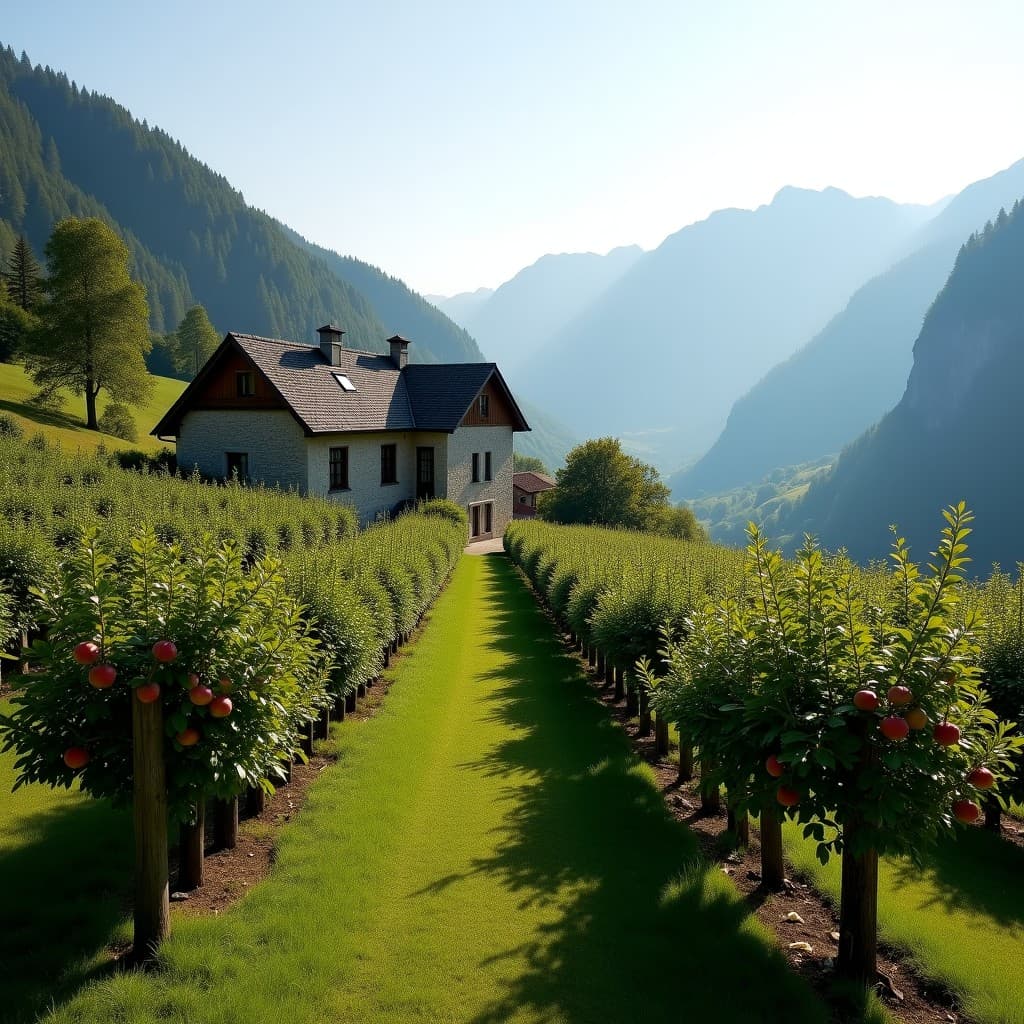
The Financial Times recently published a postcard from Val di Non, describing the valley as a delicious aberration in a country obsessed with grapes. The piece highlights how the region's focus on apples, cider-making and strudel production sets it apart from Italy's dominant wine-tourism economy, drawing foreign visitors seeking something beyond the Tuscan and Piedmontese vineyard narratives that dominate international travel coverage.
For Trentino-Alto Adige, the attention reflects a broader shift in how foreign media and travellers perceive the region's economic identity. While South Tyrol and the Trentino valleys have long marketed themselves as Alpine destinations, the international travel press increasingly recognizes the region's bilingual, Austro-Hungarian agricultural heritage as a distinct product. Val di Non's apples—the valley produces roughly 10 percent of Europe's supply—and its cider traditions represent an agritourism model that differs markedly from the wine-estate tourism that dominates central Italy.
The Financial Times framing matters because it positions Val di Non not as a niche or marginal economy but as a corrective to a stereotype about Italy. Foreign travel media, particularly British and German outlets, have long packaged Italy as a wine-and-art destination; the Financial Times piece suggests that foreign readers increasingly seek regional specificity and cultural diversity within Italy, not just the canonical Florence-Venice-Rome circuit. For Trentino-Alto Adige's tourism marketing, this offers a counternarrative: the region is not an extension of central Italian wine country but a distinct Alpine-Mediterranean zone with its own food, language and heritage.
The regional angle is reinforced by Trentino's special autonomy, which has allowed the region to develop its own agricultural branding and tourism strategy independently of Rome. Unlike many Italian regions, Trentino-Alto Adige maintains significant control over regional development funds and can market itself directly to foreign visitors and media. Val di Non's prominence in international travel writing reflects this capacity: the valley has invested in farm tourism, cider production facilities open to visitors, and culinary experiences that highlight local produce and Austro-Hungarian cooking traditions.
The shift also signals a maturing of foreign travel interest in Italy away from mass-tourism hotspots toward agritourism and regional food systems. Tourism-review.com reported this month that campgrounds and holiday resorts across Italy saw a 34 percent increase in search activity since 2025, with 77 percent of bookings coming from families. For Val di Non, this trend aligns with the valley's existing infrastructure: family-friendly farm stays, orchards open for picking, and small-scale hospitality that contrasts with the luxury-hotel model dominant in Tuscany or the Amalfi Coast. The Financial Times coverage suggests foreign media are beginning to recognize this as a legitimate and attractive alternative to Italy's wine-tourism monoculture.