
FRIULI-VENEZIA GIULIA
Veneto declares drought emergency as northeast water stress deepens
The Po River basin faces critical shortages; Trieste port operations and regional agriculture brace for prolonged strain.
Sergio Madrussan621 wordsEdition №35Saturday, 4 July 2026 — Edition № 35
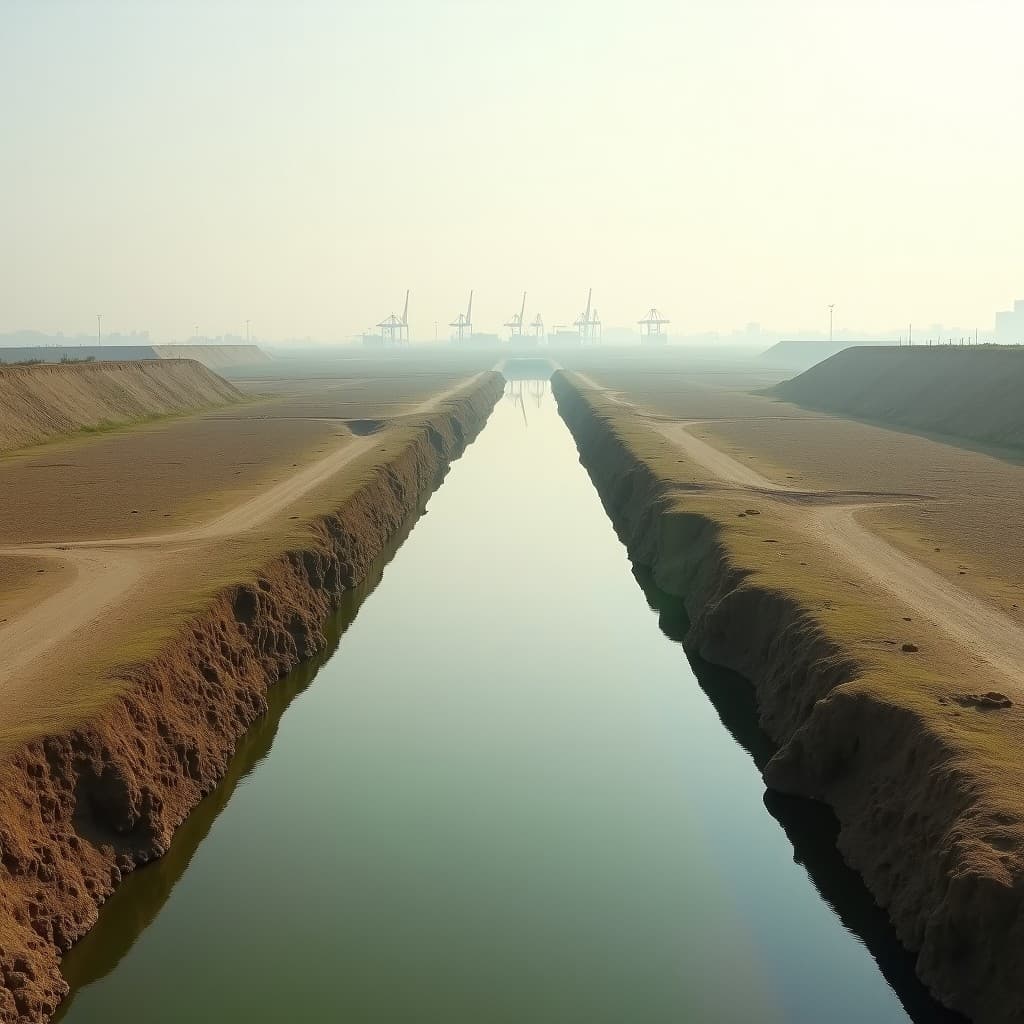
Veneto, encompassing Venice and the heart of the Friuli-Venezia Giulia hinterland, declared a state of emergency on Thursday due to drought conditions, according to the Local Italy. The region recorded more than a quarter less rainfall from January to May compared with the same period in 2025, a shortfall that has pushed water reserves to dangerous lows. The Po River Authority warned Friday that several northern Italian waterways are in a "critical state," with forecasts offering little relief in the coming days.
The drought cuts deep into the regional economy. Veneto's agricultural sector, which supplies much of northern Italy's irrigation needs, faces severe constraints on water allocation. The Port of Trieste, Italy's largest Mediterranean gateway and the commercial spine of Friuli-Venezia Giulia, depends on reliable freshwater flows for cooling systems in its petrochemical and industrial operations, and for maintaining navigable channels in the lagoon approaches. A prolonged water shortage threatens both throughput and the viability of heat-sensitive processes.
The crisis also shadows the region's role as a Central European crossroads. Water stress in the Po basin ripples into supply chains linking Italy to Austria, Slovenia and beyond. Tourism in the Venice lagoon, already fragile, faces additional pressure: lower water levels complicate boat traffic and expose the lagoon's saltwater intrusion problems, issues the Local Italy reported earlier as freshwater dams emptied. The northeast's vulnerability to climate stress—already visible in the heatwave that gripped Italy and the Balkans at the end of June—now extends into a dry season that may last through summer.
The drought declaration comes as Italy confronts a broader pattern of hydrological stress. Al Jazeera reported on June 29 that a record-breaking heatwave had tightened its grip on Italy and the Balkans, killing hundreds and fuelling wildfire fears. That extreme heat accelerated evaporation across the Po Valley and the northeast, draining reservoirs faster than winter and spring rains could replenish them. The Local Italy reported that seven regions across central Italy came under storm alerts as a cold front moved south on Thursday and Friday, but the forecast offered only temporary relief; the Po River Authority's assessment of "critical state" reflects a longer structural deficit.
For Trieste and the northeast, water scarcity intersects with port geopolitics. The Port of Trieste handles roughly 60 million tonnes of cargo annually, much of it oil and refined products that require significant freshwater cooling capacity. Industrial users and municipal authorities compete for limited supplies. The regional government's emergency declaration signals to the EU and to shipping operators that water rationing may soon follow, potentially affecting vessel turnaround times and refinery operations. Central European shippers and logistics firms that route goods through Trieste face uncertainty about seasonal reliability.
The Local Italy also reported that Veneto's declaration of emergency coincides with broader EU concerns about border travel disruptions. The region straddles Italy's eastern frontier with Slovenia, a key transit point for Central European trade and migration flows. Water stress compounds logistical strain: if drought forces restrictions on barge traffic along the Po or its tributaries, multimodal operators—including PSA Padova, the new intermodal terminal joint venture reported by Seatrade Maritime on June 29—may face capacity pressures that divert freight toward road and rail, raising costs and congestion. The northeast's competitive advantage as a low-friction gateway to Central Europe depends on reliable infrastructure. Drought threatens that advantage.