
CULTURA
Venice Biennale faces artists' legal threat over voting system
More than 100 participants demand removal from visitor ballot as jury-less awards model draws fire
Eleonora Vanzetti1,487 wordsEdition №6Saturday, 6 June 2026 — Edition № 6
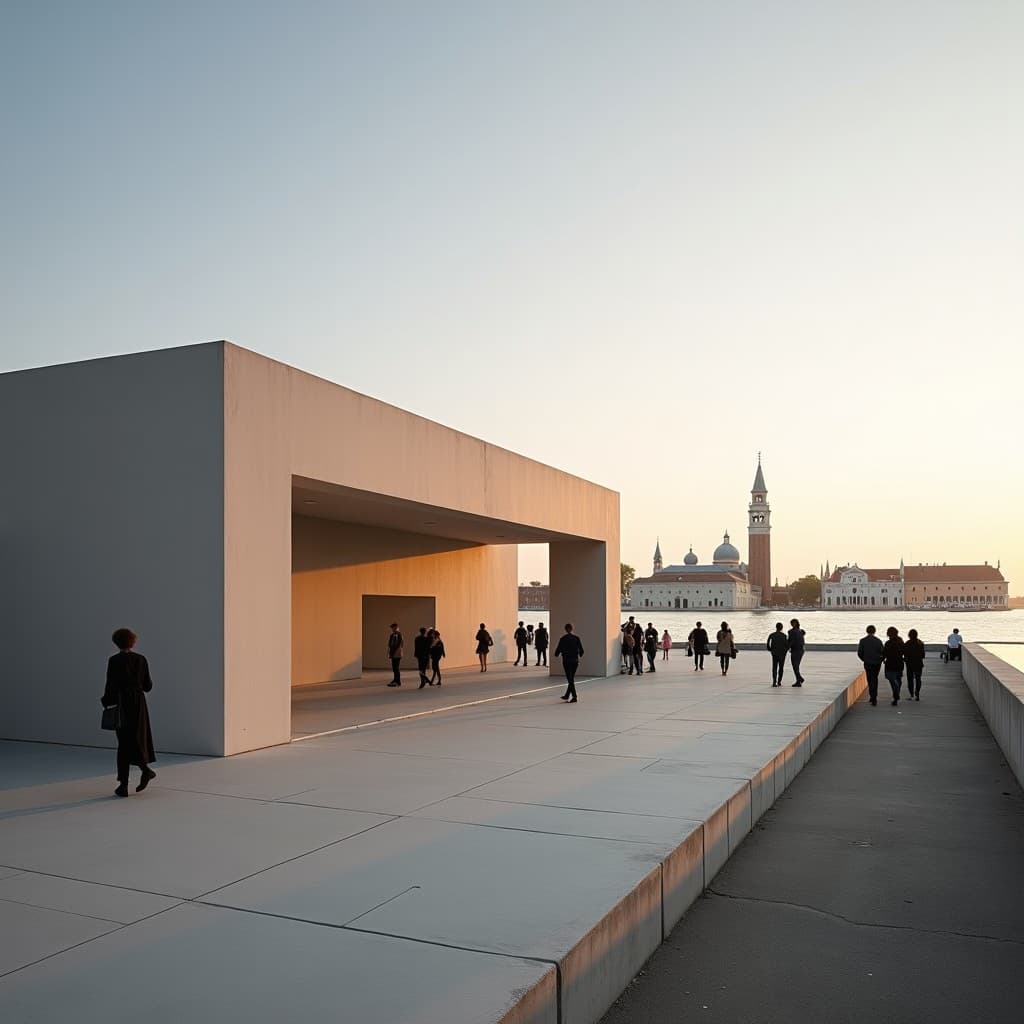
More than 100 artists participating in the Venice Biennale have threatened legal action against the show's organisers over a dispute centred on visitor-voted awards, according to The Art Newspaper. In a statement posted on 3 June, artists from the Biennale's In Minor Keys exhibition and various national pavilions said they were disappointed that the Biennale had failed to act on repeated requests to remove them from the ballot. The dispute marks the most chaotic and contested edition of the Biennale in recent memory, AP News reported.
The controversy stems from the Biennale's decision to abandon its traditional jury system for awarding the prestigious Golden Lions and instead allow visitors to vote for the best national pavilion and overall participants. Artists have objected to being included in this ballot without their consent, raising questions about the legitimacy of the awards process. The voting model, introduced this year, was meant to democratise the selection process but has instead created a legal and ethical minefield for the institution.
The timing of the artists' action coincides with other tensions at the 2026 edition. Pussy Riot and FEMEN activists have protested Russia's return to the Biennale following its absence after the 2022 invasion of Ukraine, according to Newser. The convergence of these disputes—over governance, consent, and geopolitics—has transformed what was meant to be a celebration of contemporary art into a battleground over the Biennale's role and values.
The Venice Biennale, founded in 1846, has long positioned itself as a neutral platform for international cultural exchange. Under Benito Mussolini's fascist regime in 1931, it was styled as 'the Geneva of the arts'—a rhetoric of neutrality that has persisted for nearly a century, according to STIRworld. That framing has allowed the institution to host participants from conflicting nations and ideologies without taking explicit political stances. Yet the 2026 edition has exposed the fragility of that neutrality claim.
The jury-less voting system represents a departure from the Biennale's traditional governance model. For decades, appointed juries of curators, critics, and art world figures deliberated on awards, lending institutional authority and expertise to the selections. By moving to visitor voting, the Biennale sought to broaden participation and democratise the process. However, the shift has created unintended consequences: artists were included in the ballot without being asked, and many have objected to having their work evaluated by a system they did not consent to join.
The legal threat is not merely procedural. Artists argue that inclusion in a visitor-voted awards system without consent violates their intellectual property and autonomy. The Biennale's failure to remove names despite repeated requests has escalated the dispute from administrative grievance to potential litigation. The Art Newspaper reported that the statement from over 100 artists was posted on e-flux, a platform widely used by the international art community, signalling that the dispute has become a matter of public record and professional concern.
The geopolitical dimension adds another layer of complexity. Russia's return to the Biennale this year, after being absent following the 2022 invasion of Ukraine, has drawn protests from activist groups. Pussy Riot and FEMEN members have demonstrated outside the Russian pavilion, according to Newser, raising questions about whether the Biennale's claim to neutrality can hold when one nation's presence is contested on moral and political grounds. The institution's inability to navigate this tension—or to articulate a coherent position on what neutrality means in wartime—has undermined its credibility.
For Venice and the Veneto region, the Biennale is a cultural and economic anchor. The show draws international visitors, media attention, and prestige that reverberates through the city's museums, galleries, and cultural institutions. A contentious, legally embattled Biennale risks damaging that reputation. Foreign coverage of the 2026 edition will likely focus on institutional dysfunction rather than artistic merit, potentially affecting visitor numbers and the broader cultural ecosystem that depends on the Biennale's standing.
The artists' legal action also reflects broader questions about power and consent in the art world. The Biennale's decision to implement visitor voting without consulting participants suggests a top-down approach to institutional reform. The backlash indicates that artists expect to have a say in how their work is presented and judged. This tension between institutional autonomy and artist agency is not unique to Venice, but the Biennale's prominence makes it a focal point for these debates.
STIRworld quoted Clarissa Ricci, a specialist in the Biennale's history, noting that 'the Biennale has kept the rhetoric of neutrality because it's really handy—you can have anybody take part and say it's not a problem.' That convenience may no longer be available. The 2026 edition has forced the institution to confront the limits of neutrality when faced with concrete ethical and legal challenges.
The timing of the artists' statement—posted on 3 June, early in the Biennale's run—suggests that the dispute will dominate coverage throughout the show's duration. International art media outlets have already reported extensively on the legal threat and the geopolitical tensions, framing the 2026 Biennale as a case study in institutional crisis. For the Biennale's leadership, the challenge now is to respond to the legal demands while maintaining the show's credibility and artistic integrity.
The broader context includes a decade of institutional reckoning in the art world. Museums and biennales globally have faced pressure to diversify their governance, centre artist voices, and address historical inequities. The Venice Biennale's move to visitor voting can be read as an attempt to respond to these pressures, but the execution has backfired. The legal threat from over 100 artists suggests that reform without consultation is unlikely to succeed.
The outcome of this dispute will have implications beyond Venice. Other major art institutions may watch closely to see how the Biennale resolves the legal threat and whether it reverts to a jury system or attempts to salvage the visitor-voting model. The resolution will also signal whether the Biennale can maintain its position as a leading international art event or whether its institutional credibility has been permanently damaged by the 2026 chaos.
For now, the Biennale remains open, and the visitor voting continues. But the artists' legal threat casts a shadow over the proceedings. The show that was meant to celebrate contemporary art has instead become a case study in institutional failure—a stark reminder that even the most prestigious cultural institutions are not immune to governance crises and that the rhetoric of neutrality, however convenient, cannot survive sustained ethical and legal challenge.