
MOLISE
Flamingos return to Venice as lagoon ecosystems recover
Growing population of pink birds signals restoration of wetlands; tourism and climate remain threats to fragile habitats
Antonio Petrella1,198 wordsEdition №3Wednesday, 3 June 2026 — Edition № 3
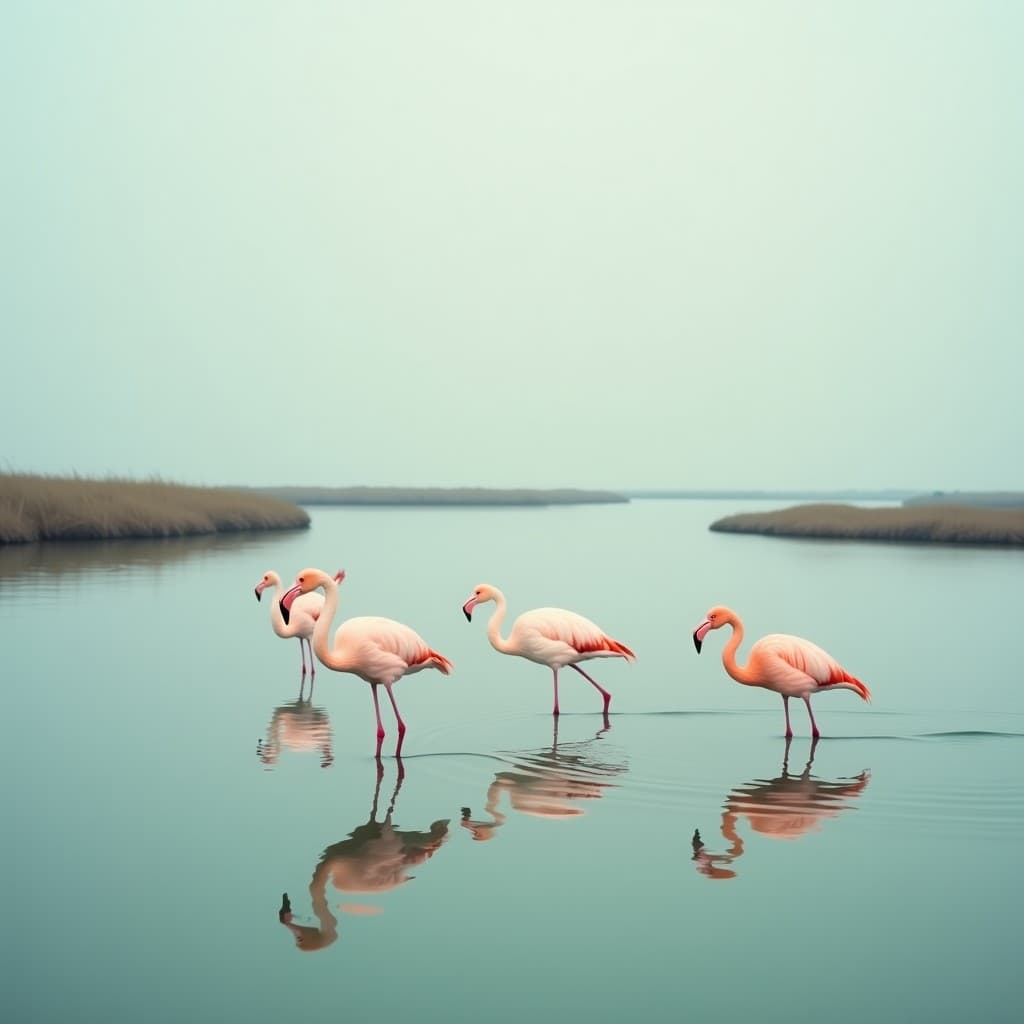
Flamingos have begun to establish a permanent presence in the Venetian lagoon, AP News reported, marking an unexpected return of a species that had been absent from the region for generations. The birds, which feed in shallow waters and salt marshes, have found refuge in recovering wetlands as restoration efforts and reduced human pressure allow lagoon ecosystems to regenerate.
The flamingos' arrival signals ecological recovery in one of Europe's most fragile and heavily visited environments. Venice's lagoon has been shaped by centuries of engineering—dikes, canals, dredging—that altered water flows and destroyed natural habitats. Recent conservation efforts have begun to reverse some of that damage, creating conditions where wildlife can return.
The phenomenon carries symbolic weight in a region where tourism and environmental stress have become inseparable. Venice attracts roughly 30 million visitors annually, a figure that has drawn sustained international criticism and prompted UNESCO to warn of the city's vulnerability. The flamingos' presence offers a counternarrative: that recovery is possible, even in the world's most visited wetland.
AP News documented flamingos feeding and reacting to human presence in the Venetian lagoon in early May 2026, suggesting a breeding or wintering population rather than occasional vagrants. The birds' behaviour—raising their necks in response to observers—indicates they are habituated to the lagoon environment, though wary of close approach. This level of comfort suggests the population has been present for more than a single season.
Flamingos are not native to the Venetian lagoon in historical records, though they were present in Mediterranean wetlands before human settlement and drainage eliminated suitable habitat across much of southern Europe. The species typically inhabits salt marshes, shallow lagoons, and alkaline lakes where they filter-feed on algae and small crustaceans. The Venetian lagoon, with its complex system of salt marshes, shallow channels, and brackish water, provides the conditions flamingos require.
The return of flamingos reflects broader ecological changes in the lagoon. Conservation efforts over the past two decades have focused on restoring natural water circulation, reducing pollution, and protecting salt marshes from further degradation. These measures have allowed seagrass beds to recover, fish populations to stabilise, and invertebrate communities to rebuild. Flamingos, as filter-feeders, depend on abundant small organisms; their presence indicates that food webs have recovered sufficiently to support them.
The lagoon's recovery has not been linear or complete. Venice faces multiple environmental pressures: sea-level rise driven by climate change, subsidence of the city itself, pollution from urban and industrial sources, and the physical impact of mass tourism. The MOSE flood barrier, completed in 2020, has reduced the frequency of high tides that once flooded the city regularly, but it has also altered water circulation patterns in ways that scientists are still assessing.
Tourism remains the dominant force shaping Venice's ecology and economy. The city's 260,000 residents are vastly outnumbered by the 30 million annual visitors, according to figures cited repeatedly in international coverage. Cruise ships, motorboats, water taxis, and gondolas churn the lagoon's waters daily, resuspending sediment and disrupting wildlife. The flamingos' ability to feed and breed despite this disturbance suggests either remarkable adaptability or that they are confining themselves to the quieter margins of the lagoon, away from the main tourist channels.
The flamingos' arrival also reflects climate change, though in a complex way. Warming temperatures have allowed species to expand their ranges northward. Mediterranean flamingos, which breed in North Africa and the Middle East, may be shifting their wintering grounds or breeding grounds northward as conditions warm. The Venetian lagoon, once too cold for year-round residence, may now offer suitable conditions for at least part of the year.
International conservation groups have highlighted Venice's lagoon as a test case for wetland restoration in heavily urbanised settings. The Guardian and other European outlets have covered the lagoon's recovery as a counterpoint to stories of environmental collapse in Mediterranean cities. The flamingos fit that narrative: visible, charismatic wildlife that signals ecological recovery to a global audience.
The flamingos also raise questions about the limits of restoration. A recovering lagoon can support returning wildlife, but it cannot absorb unlimited human activity. Venice's tourism model—built on the assumption that the city can accommodate 30 million annual visitors—remains fundamentally at odds with the ecological recovery that makes the city worth visiting. The flamingos' presence is encouraging; it is not, however, a solution to the structural tensions that define Venice's future.
Molise, though landlocked and distant from Venice, shares some of these tensions. The region has promoted heritage tourism—the tratturi, the Albanian and Croatian minority villages, the pastoral landscape—as a path to economic survival. Like Venice, Molise faces the risk that tourism, if unmanaged, will degrade the very assets it is meant to celebrate. The flamingos' story offers a lesson: recovery is possible, but only if the underlying ecosystem is protected from overuse.
The Venetian lagoon's recovery also depends on EU environmental funding and Italian government commitment. The Natura 2000 network, which designates protected areas across the EU, includes significant portions of the lagoon. EU cohesion funds have supported restoration projects. These mechanisms are not guaranteed to continue, and political pressure to prioritise economic development over conservation remains constant.
The flamingos' presence in Venice is fragile. A single harsh winter, a disease outbreak, a major pollution event, or a policy shift that deprioritises conservation could reverse the gains of the past two decades. The birds are, in that sense, hostages to forces far larger than themselves: climate, politics, tourism, and the long-term viability of the city itself.
For international observers, the flamingos represent hope. For Venetians and conservationists, they represent a precarious equilibrium that must be actively maintained. The birds will remain only as long as the lagoon remains worth returning to—a condition that Venice's government and the EU must actively choose to preserve.