
CAMPANIA
Scientists find vitrified brain tissue in Herculaneum skull
Nearly 2,000 years after Vesuvius, researchers challenge assumptions about the eruption's destructive power
Rosaria Esposito1,247 wordsEdition №6Saturday, 6 June 2026 — Edition № 6
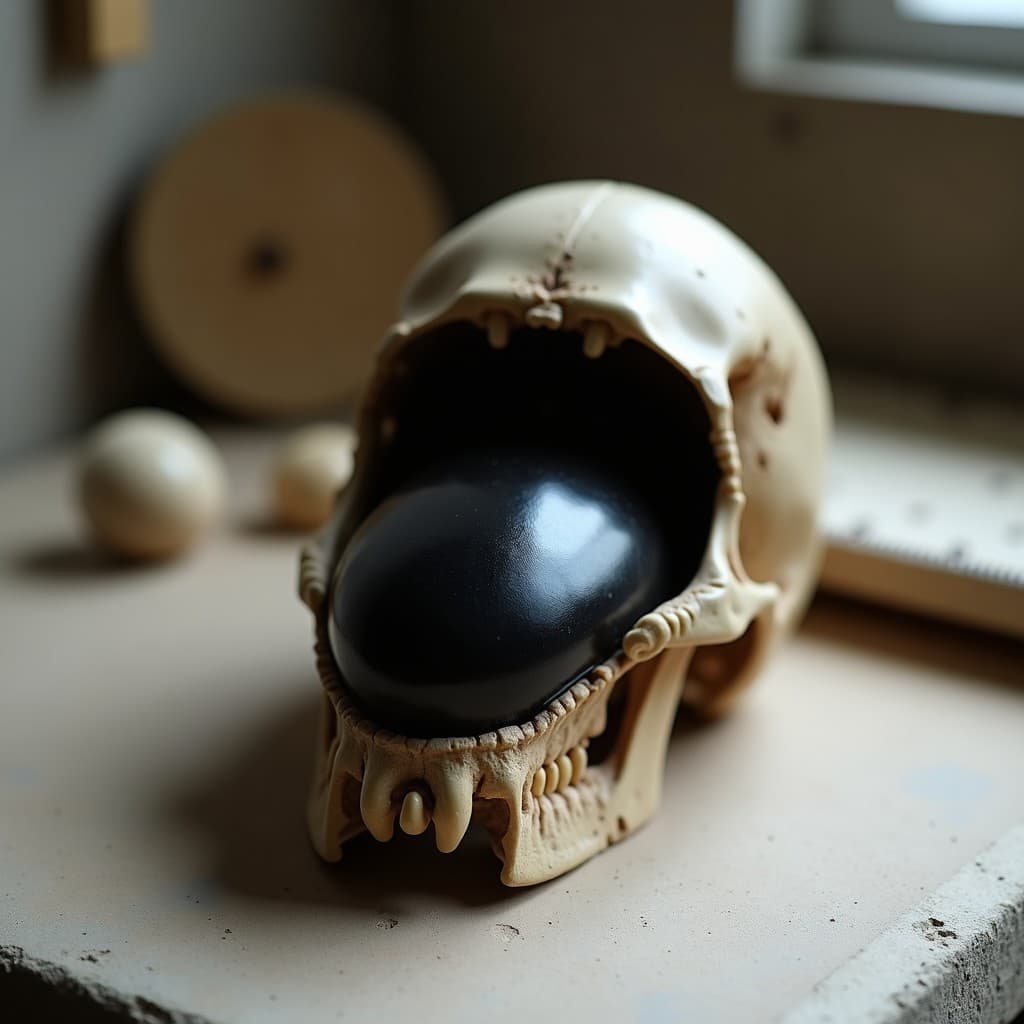
Scientists examining skeletal remains unearthed from the Collegium Augustalium in Herculaneum have identified a black glass-like mass inside a skull that researchers argue may be vitrified brain tissue, according to the Times of India. The discovery challenges long-held assumptions about the total destructive force of Mount Vesuvius's eruption nearly two millennia ago. The remains belong to a young male whose body was buried under volcanic ash when Vesuvius destroyed the Roman city in 79 AD, the same catastrophe that buried Pompeii.
The finding suggests that the eruption's extreme temperatures may have transformed neural tissue into a glassy substance rather than reducing it to ash entirely. Researchers argue this preservation mechanism offers an unexpected window into the biological consequences of the disaster. The discovery at Herculaneum, which sits closer to Vesuvius than Pompeii and suffered comparable devastation, adds to a growing body of evidence that volcanic heat created conditions for unusual preservation of organic material.
For Campania, the finding underscores the region's status as a living laboratory for volcanology and ancient history. Herculaneum and Pompeii remain among the world's most visited archaeological sites, drawing hundreds of thousands of tourists annually who come to witness the frozen moment of the eruption. The new discovery adds scientific depth to what foreign visitors often experience as a macabre tourism spectacle, grounding the region's appeal in genuine research rather than romantic ruin-gazing.
The Times of India reported that the black glass-like substance was discovered during examination of skeletal material from Herculaneum's Collegium Augustalium, a structure that served administrative functions in Roman times. The identification of what researchers believe to be vitrified neural tissue represents a significant moment in the study of Vesuvius's effects on human remains. Previous excavations at both Herculaneum and Pompeii have yielded plaster casts of bodies and skeletal material, but the preservation of soft tissue at the molecular level remains rare and scientifically valuable.
Vitrification—the process by which organic material transforms into a glass-like substance under extreme heat—occurs when temperatures exceed those typically found in standard cremation. The eruption of Vesuvius generated pyroclastic flows, superheated currents of gas and ash that moved down the mountain at speeds exceeding 100 kilometers per hour, with temperatures reaching several hundred degrees Celsius. These conditions would have been sufficient to cause rapid vitrification of exposed biological material, though the process is not uniform across all tissue types.
The discovery at Herculaneum carries particular significance because the city was buried more rapidly and completely than Pompeii, with pyroclastic material accumulating to depths of up to 20 meters. This deeper burial and the anaerobic conditions it created may have contributed to the preservation of the vitrified material. Researchers have long noted that Herculaneum's archaeological record differs from Pompeii's in important ways: organic materials including wood, food, and textiles survive in Herculaneum with far greater frequency, suggesting the volcanic ash created a protective seal.
The young male whose remains were examined had been positioned in what researchers describe as a typical posture for victims of the eruption—caught in the moment of death by the pyroclastic flow. The Collegium Augustalium where he was found was a structure associated with the imperial cult and local administration, suggesting he may have held some social standing in Roman Herculaneum. The identification of his remains adds to the growing archive of individual stories that archaeologists have reconstructed from the site.
For Campania's tourism economy, discoveries like this one sustain international interest in the region's archaeological heritage. The foreign press—particularly science and history outlets—regularly covers new findings from Herculaneum and Pompeii, generating media coverage that drives visitor numbers. Naples and the surrounding region depend heavily on heritage tourism, with Pompeii alone attracting more than three million visitors annually according to international travel reporting. Each new scientific finding refreshes the narrative around these sites and justifies the infrastructure investment required to maintain them.
The research also reflects broader international scientific interest in volcanic preservation mechanisms. Universities and research institutions across Europe and beyond have ongoing projects at Herculaneum, bringing funding and expertise to the site. The Times of India's coverage indicates that the discovery has registered in the global science press, extending Campania's reputation beyond Italy's borders as a center for archaeological and volcanological research. This international scientific presence has secondary economic effects, supporting local employment in excavation, conservation, and site management.
Herculaneum's excavation history differs markedly from Pompeii's. While Pompeii was rediscovered in the 18th century and has been continuously excavated since, Herculaneum remained largely buried until the 20th century. Only about one-third of the ancient city has been fully excavated, meaning that significant discoveries remain possible. The ongoing work at the site, funded partly by international grants and partnerships, continues to yield material that reshapes understanding of Roman life and the eruption's mechanics.
The vitrified brain tissue discovery also raises questions about what other organic material may survive in Herculaneum's volcanic layers. Researchers have previously recovered seeds, loaves of bread, and wooden furniture in remarkable states of preservation. If neural tissue can survive vitrification, it suggests that other delicate biological structures—blood vessels, organ tissue, even cellular material—might similarly persist in conditions that researchers have not yet fully understood. This possibility opens new avenues for future research and analysis.
For the international scientific community, the finding contributes to broader understanding of how extreme natural events preserve evidence of past life. Volcanology, archaeology, and forensic science all benefit from detailed study of how pyroclastic flows affect biological material. The research conducted at Herculaneum informs not only historical knowledge but also modern understanding of volcanic hazards and their consequences for human populations. This knowledge has practical applications for regions worldwide where active volcanoes pose risks to contemporary communities.
Mount Vesuvius itself remains an active volcano, though it has not erupted since 1944. Approximately three million people live in the shadow of Vesuvius today, primarily in the Naples metropolitan area and surrounding towns. International media regularly covers the volcano as a potential hazard, and scientific research at Herculaneum and Pompeii contributes to hazard assessment and emergency preparedness planning. The discovery of preserved biological material helps researchers understand the speed and intensity of past eruptions, data that informs models of potential future events.
The foreign press coverage of this discovery also reflects a broader pattern in how international outlets frame Campania and southern Italy. Science and heritage stories about the region tend to emphasize its ancient glory and natural drama—Vesuvius, Pompeii, the classical past—while contemporary Naples often receives coverage focused on crime, poverty, and urban decay. The archaeological narrative provides a counterweight, positioning the region as a place of intellectual and scientific importance, not merely a site of present-day social problems. For Campania's regional identity and tourism brand, such discoveries matter considerably.
The research team's work at Herculaneum exemplifies the international collaboration that characterizes modern archaeology. Teams from multiple countries work at the site, bringing different methodologies and perspectives to the material. The Times of India's coverage suggests that the discovery has circulated through global scientific networks, reaching audiences far beyond Italy. This international attention translates into sustained funding, visiting scholars, and media interest that benefits the region's economy and reputation.
Looking forward, the discovery of vitrified brain tissue will likely prompt more intensive study of neural material from other Vesuvius victims. Researchers may now examine previously collected skeletal material with new questions in mind, potentially identifying similar preservation in other individuals. Advanced imaging techniques and molecular analysis could yield further insights into the eruption's thermal effects and the biological consequences for those caught in the pyroclastic flows. Each new finding extends the timeline of research at these sites and deepens the scientific value they represent.