
FRIULI-VENEZIA GIULIA
Vingegaard seals Giro dominance on Friuli climb
Danish rider's stage 20 victory from Gemona del Friuli sets up first Giro-Tour double since 2010
Sergio Madrussan1,247 wordsEdition №3Wednesday, 3 June 2026 — Edition № 3
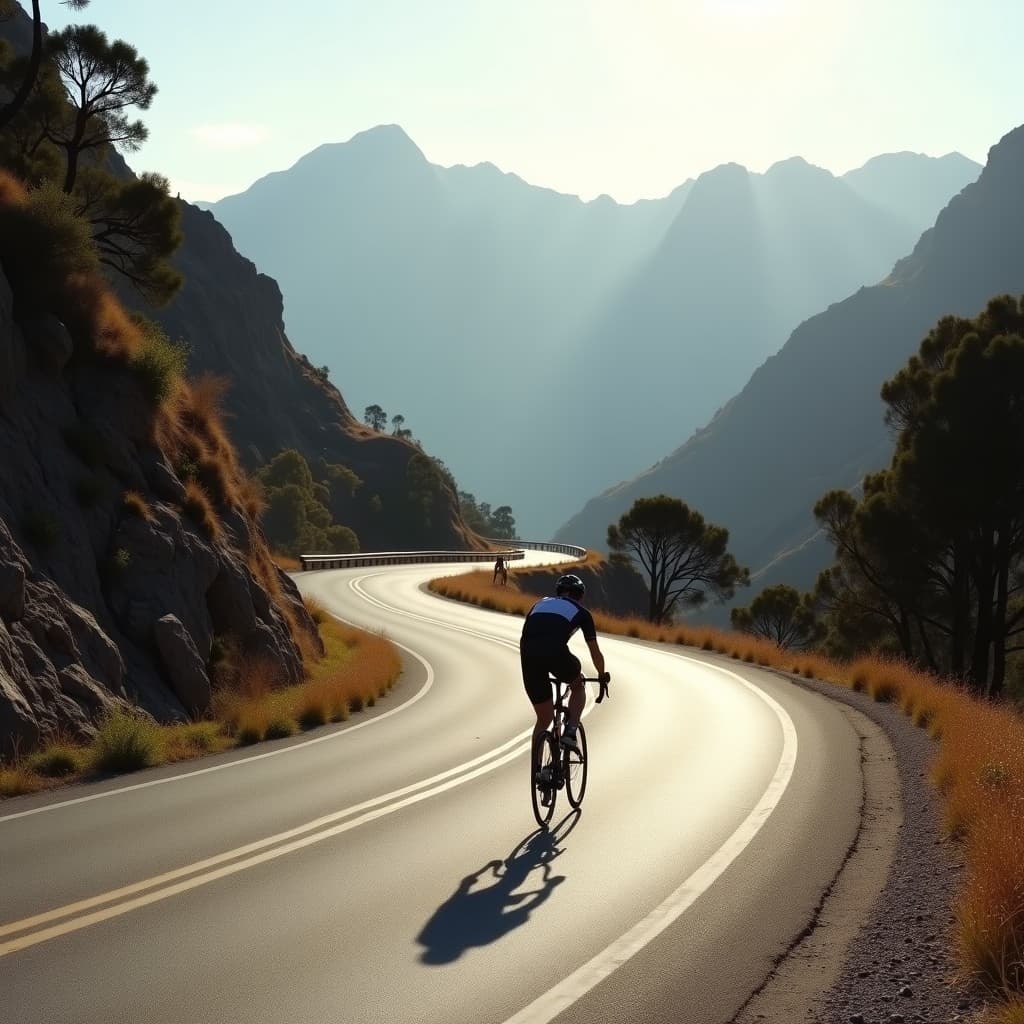
Jonas Vingegaard of Team Visma–Lease a Bike won the 20th stage of the Giro d'Italia on May 30, attacking alone on the final climb to Piancavallo and consolidating his overall lead. The Danish rider, who started the day already commanding the general classification, finished ahead of his rivals on a mountain stage that began in Gemona del Friuli, in the heart of the Friuli-Venezia Giulia region.
The victory puts Vingegaard on the brink of winning the Giro, with only the final time trial and ceremonial stage remaining. If he holds his advantage, he will become the ninth male cyclist to complete the Giro-Tour de France double in the same calendar year, a feat last achieved in 2010. The route through Friuli's Alpine terrain—one of Italy's most challenging cycling landscapes—has long been a proving ground for Grand Tour contenders.
Vingegaard's dominance on the mountain stages reflects the form that made him a two-time Tour de France champion. His ability to isolate rivals on steep gradients has defined his career, and the Piancavallo finish, with its sustained 8 per cent gradient, suited his climbing style. The stage win came after weeks of racing through Italy's varied terrain, from the southern coasts to the northern Alps.
The Giro d'Italia has passed through Friuli-Venezia Giulia multiple times in its 109-year history, but stage 20 of the 2026 edition held particular significance. Starting in Gemona del Friuli, a town in the Udine province known for its medieval architecture and position on the Tagliamento River, the stage climbed northward through the Julian Alps toward the Piancavallo finish. This route traces the eastern edge of the Italian Alps, a region where continental weather patterns and steep gradients create some of the Giro's most demanding terrain.
Gemona del Friuli itself sits at the gateway between the Friuli plain and the mountains, a landscape that has shaped the region's cycling culture for generations. The town lies roughly 100 kilometres north of Trieste, the regional capital, and the stage's trajectory northward mirrors the geography that defines Friuli-Venezia Giulia: a transition from Mediterranean influences to Central European climate and terrain. The Piancavallo climb, at 1,946 metres, sits within the Carnia region, an area of sparse population and dramatic topography.
According to Reuters and the Washington Post, Vingegaard's stage victory was decisive and uncontested. He attacked in the final kilometres of the climb, dropping his nearest competitors and crossing the line with a margin that suggested he was managing his effort rather than fully extending himself. The Washington Post noted that the victory effectively sealed the Giro title, barring an unprecedented collapse in the remaining stages.
The significance of a Giro-Tour double extends beyond individual achievement. Only eight male cyclists have completed both the Giro d'Italia and the Tour de France in the same year: Eddy Merckx, Bernard Hinault, Stephen Roche, Miguel Indurain, Marco Pantani, Alberto Contador, Vincenzo Nibali, and Egan Bernal. The last to do so was Nibali in 2013. Vingegaard's path to joining this exclusive group began with his dominance in the Giro's high mountains, where the route through Friuli and the Alps provided the decisive battleground.
For Friuli-Venezia Giulia, the passage of the Giro through its territory carries economic and cultural weight. The region's cycling infrastructure—hotels, restaurants, and support services in towns along the route—benefits from the three-week race. More broadly, the Giro's routing through the Alps and the Julian Mountains reinforces Friuli's identity as a frontier region where Italian and Central European landscapes meet. The race's presence in Gemona del Friuli and the climb to Piancavallo draws international attention to areas that, while economically important, often remain peripheral in Italy's national consciousness.
The cycling press in Central Europe and beyond has followed Vingegaard's progress closely. His Danish nationality and his team's Dutch base mean that the Giro victory carries significance across the northern European cycling community. The Washington Post's coverage emphasised the historical rarity of the Giro-Tour double, framing Vingegaard's performance as part of a lineage of cycling's greatest champions.
Stage 20's conclusion on May 30 left only two stages remaining: the penultimate mountain stage and the final time trial into Rome. Vingegaard's lead was substantial enough that barring mechanical failure or a dramatic tactical collapse, the Giro title was his to lose. The stage win on Piancavallo represented not merely a victory but a coronation, delivered on terrain that has tested every Grand Tour cyclist who has raced through Friuli.
The route design itself reflected the Giro's traditional use of the Alps as a final arbiter of overall victory. By placing the decisive mountain stages in the north—in Friuli and the surrounding regions—the race organisers ensured that the winner would be determined by performance in terrain where climbing ability and tactical acumen are paramount. Vingegaard's solo victory on Piancavallo demonstrated both qualities in abundance.
For the Friuli-Venezia Giulia region, the Giro's passage through its territory underscores its role as a gateway between Italy and Central Europe. The Alps that form the region's northern boundary are not merely scenic backdrop; they are integral to the region's identity and economy. The cycling race, by routing through towns like Gemona del Friuli and climbing to high Alpine finishes, brings international visibility to landscapes and communities that define the region's character.
Vingegaard's imminent Giro victory also reflects broader trends in professional cycling. The dominance of northern European and Scandinavian riders in recent years has shifted the sport's centre of gravity northward, even as the Grand Tours remain rooted in their traditional territories. The Giro's passage through Friuli, then, becomes a meeting point: an Italian institution traversing Italian terrain, yet increasingly contested by riders from beyond Italy's borders, watched by audiences across Europe and beyond.