
CULTURA
New York Celebrates Italian-American Illustration Bridge
The inaugural Zig Zag Festival brings Bologna's children's book tradition to Manhattan, extending a decades-old international conversation.
Eleonora Vanzetti1,389 wordsEdition №4Thursday, 4 June 2026 — Edition № 4
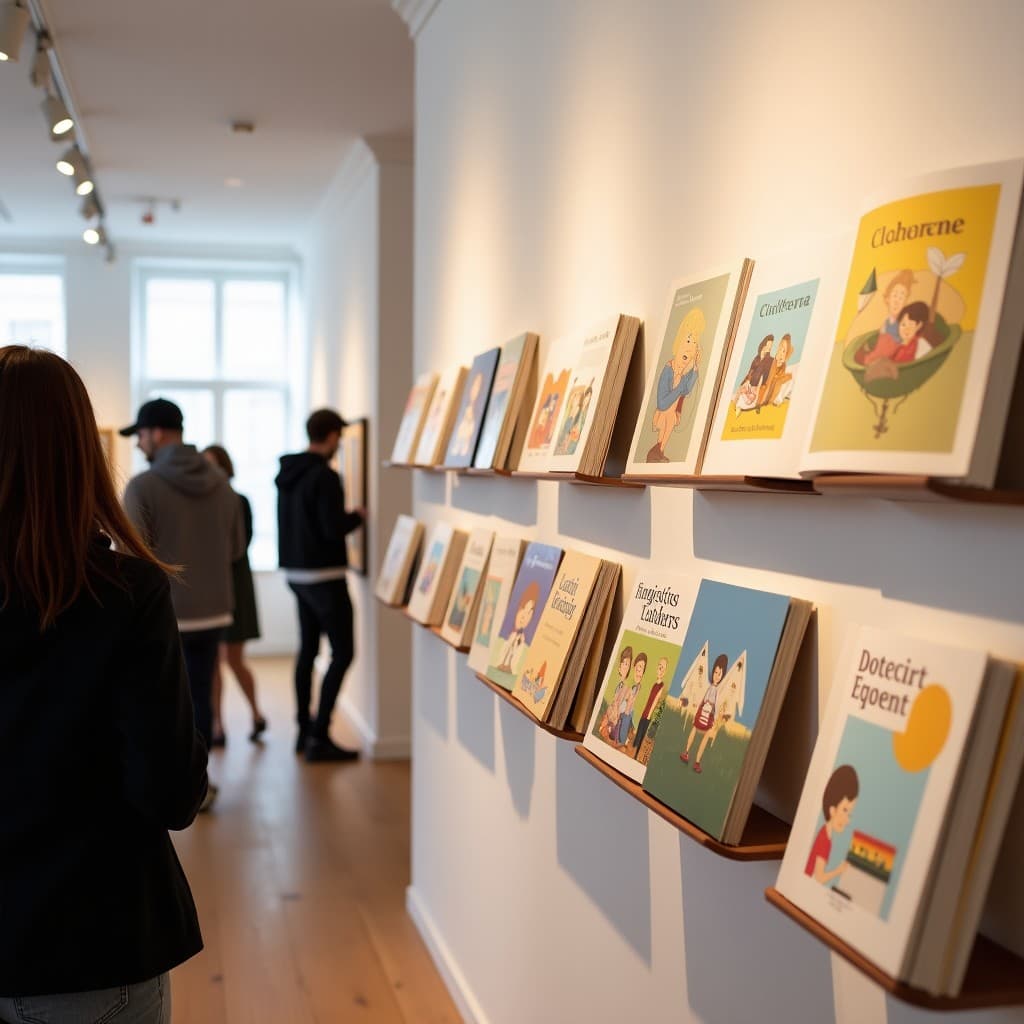
The Bologna Children's Book Fair, held annually in Italy since 1964, has long served as the world's primary marketplace and gathering place for children's literature professionals. Now, according to Publishers Weekly, the festival's international influence is expanding northward. The inaugural Zig Zag Festival, billed as "a visual bridge between Italy and the U.S.," will take place in New York City from June 8 through June 12 across multiple venues. The festival extends conversations fostered each spring by Bologna, bringing Italian and American illustrators and designers into direct dialogue in Manhattan.
The festival centers on prominent Italian and American illustrators whose work exemplifies the cross-Atlantic exchange. Publishers Weekly names Sergio Ruzzier and Emiliano Ponzi—both influential figures in contemporary illustration—as representative of the tradition being celebrated. Ponzi, who founded the Salotto (a gathering space for designers and illustrators), represents the kind of creative community-building that Bologna has long encouraged. The festival's scope suggests an effort to formalize and expand what has been an organic professional relationship between Italian and American illustration communities.
For Italy's cultural economy, children's books and illustration represent a significant export category. Italian design and illustration have long influenced global visual culture, from fashion to graphic design to publishing. The Bologna Children's Book Fair itself is a major international event that brings publishers, agents, illustrators and booksellers from dozens of countries to Italy each spring. Zig Zag Festival's arrival in New York signals that Italian illustration's influence has become substantial enough to warrant dedicated celebration in one of the world's major publishing and design centers.
The Bologna Children's Book Fair is one of Europe's largest book fairs and the world's most important marketplace for children's literature. Founded in 1964, it has grown into a week-long event that attracts thousands of publishing professionals, illustrators, authors and booksellers from more than a hundred countries. The fair's influence on the global children's book industry is substantial: publishers scout for talent there, foreign rights are bought and sold, trends are set, and new illustrators gain international exposure. Bologna's position as the center of this world has made the city synonymous with children's literature excellence.
Italian illustration has a distinctive aesthetic tradition that has influenced design globally. The country's long history of graphic design, fashion illustration and fine art has created a visual vocabulary that American and international designers have drawn from for decades. Publishers Weekly's framing of Zig Zag as "a visual bridge" acknowledges this asymmetry: the festival is not positioned as a meeting of equals but as a deliberate effort to bring Italian visual traditions into conversation with American ones. The inclusion of figures like Emiliano Ponzi suggests that the festival aims to celebrate not just individual illustrators but the creative communities and institutions that produce them.
Emiliano Ponzi's role as founder of the Salotto adds another dimension to the festival's significance. The Salotto functions as an informal gathering space for designers and illustrators in Italy, a place where creative exchange happens outside formal institutional structures. By highlighting Ponzi and his work, Zig Zag Festival signals that it is interested in the social and institutional contexts that nurture illustration, not merely in displaying finished works. This approach aligns with how the international design press increasingly covers creative practice—as embedded in communities, mentorship networks and shared spaces rather than as the isolated work of individual talents.
Sergio Ruzzier, the other illustrator named by Publishers Weekly, is a prolific figure in contemporary children's illustration whose work spans picture books, graphic novels and editorial illustration. Ruzzier's prominence in both Italian and American publishing circles makes him an ideal representative of the cross-Atlantic exchange the festival celebrates. His career trajectory—working in both markets, contributing to publications on both sides of the Atlantic—exemplifies the kind of professional mobility that Bologna has long facilitated.
The timing of Zig Zag's inaugural edition is notable. The festival launches in June, several months after the Bologna Children's Book Fair concludes its spring edition. This timing allows it to function as a continuation of conversations begun in Bologna, a way of extending the fair's influence and energy into the American market. For Italian illustrators and designers, the festival offers direct access to New York's publishing industry, media and design communities. For American publishers and designers, it provides structured engagement with Italian creative traditions.
Publishers Weekly's coverage emphasizes the festival's scope: it will take place "across various venues" in New York City, suggesting a distributed model rather than a single centralized location. This approach mirrors how major art and design events have increasingly organized themselves in recent years, using multiple galleries, museums, independent spaces and cultural institutions to create a larger, more immersive experience. The multi-venue format also makes the festival more accessible to different audiences across Manhattan and potentially beyond.
The festival's emergence reflects broader trends in how cultural exchange operates in the contemporary art and design world. Bologna itself has evolved beyond a traditional book fair into a cultural institution that hosts symposia, exhibitions and professional development programs. Zig Zag can be understood as a satellite of this expanded mission—an effort to extend Bologna's curatorial vision and professional network into new geographic markets. For New York, the festival adds another seasonal cultural event to a calendar already crowded with art fairs, design weeks and literary festivals.
Italian children's book illustration has a distinctive visual language that often emphasizes playful color, expressive line work and a kind of sophisticated whimsy that appeals to both children and adults. This aesthetic has influenced picture book design globally, and American publishers have long sought out Italian illustrators for their distinctive contributions to the field. Zig Zag Festival, by celebrating this tradition explicitly, acknowledges and validates the importance of Italian visual culture to the international children's publishing industry.
The festival's positioning as a "visual bridge" is particularly apt because it acknowledges that illustration is a visual language that transcends national boundaries and linguistic differences. An Italian-made picture book can be translated into English without losing its visual impact; indeed, the illustrations often carry meaning independent of the text. This visual universality has made illustration a particularly effective vehicle for cultural exchange and soft power. Italy's strength in this field contributes significantly to how the country is perceived internationally—not primarily through political or economic measures but through the aesthetic experiences that Italian design and illustration provide.
For the Cultura bureau, Zig Zag Festival represents an important development in how Italian cultural institutions extend their reach internationally. Rather than waiting for foreign audiences to come to Italy, the festival brings Italian creative traditions directly to a major international market. This active export of cultural influence aligns with how Italy's government and cultural organizations increasingly approach cultural diplomacy—as an intentional, strategic effort rather than a passive benefit of historical prestige.
The festival also reflects the international children's publishing industry's increasing recognition of illustration as a significant creative and commercial category. In recent decades, picture books and illustrated works have become increasingly valued by collectors, museums and serious readers, no longer relegated to a purely commercial or juvenile category. High-quality illustration is now recognized as a legitimate art form worthy of critical attention and institutional support. Zig Zag Festival's existence implicitly endorses this elevation of illustration's cultural status.
Publishers Weekly's coverage suggests that the festival has attracted attention from major international publishing figures and institutions, lending it credibility and momentum from its inaugural year. The involvement of established illustrators like Ruzzier and Ponzi, and the coordination with Bologna's existing infrastructure and professional networks, indicates that this is not a marginal or experimental event but rather a strategic expansion of Bologna's influence. Success in the inaugural year could lead to the festival becoming an annual fixture on the international design and publishing calendar.
For American illustrators and designers, the festival offers opportunities for professional development, exposure to Italian creative approaches, and potential collaborations with Italian peers. For Italian participants, it provides direct market access and the chance to build relationships with American publishers, agents and institutions. The mutual benefit structure suggests that Zig Zag Festival is likely to develop into a sustained institutional relationship rather than a one-off event.
The festival's focus on illustration also reflects a broader international trend toward celebrating visual design as a primary cultural export. In an increasingly image-saturated world, where visual communication often precedes or supersedes text, illustration has become a key category of cultural production. Italy's traditional strengths in design, fashion and visual arts position the country well to capitalize on this trend. Zig Zag Festival is one manifestation of this strategic focus on visual culture as a vehicle for cultural influence and economic activity.